

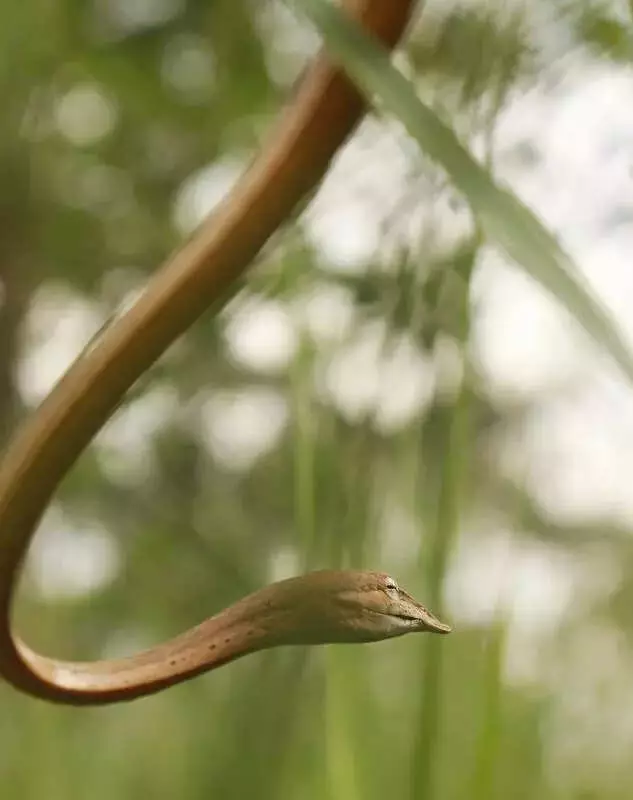
Snake 'Rescues' in Terai Endanger Reptiles, Warn Wildlife Experts
Wildlife experts in the Terai region have raised serious concerns about current snake rescue practices. They warn that panic-driven and unscientific interventions are increasingly endangering reptile populations instead of protecting them. This troubling trend threatens the ecological balance of this biodiverse area.
Unscientific Interventions Disrupt Natural Behavior
Field biologists and herpetologists report that snakes found in farms, canal embankments and village edges face routine capture and relocation without ecological justification. These areas form natural extensions of snake habitats. Experts argue such actions disrupt natural behavior, expose snakes to starvation and thermal stress, and often prove fatal.
Vipin Kapoor Sainy, a field biologist at Dudhwa Tiger Reserve, conducted long-term research on snake rescue methods. He says the rise of untrained or inadequately trained snake rescuers has turned conservation response into a spectacle. "In many places, rescue has shifted from scientific intervention to visibility-driven activity, often amplified by social media," Kapoor explains.

He describes how snakes face repeated handling, photography, transportation across districts and release into unsuitable habitats. "This is neither ethical nor effective," Kapoor emphasizes. He adds that such interventions do little to reduce human-snake conflict. "Ironically, even species that naturally avoid humans are being 'rescued'. This reinforces fear and misinformation rather than coexistence."
Ecologically Beneficial Species Suffer Most
Rudra Prasanna Mahapatra, a herpetologist with the Wildlife Trust of India, supports this view. He says ecologically-beneficial snake species bear the brunt of these actions. "Snakes that help farmers by controlling rodents are being removed from their natural landscapes," Mahapatra states. "When released far from their habitat, they face prey scarcity, loss of shelter, higher thermal stress and increased mortality."
Field data from Dudhwa highlights the scale of concern. The Terai region has emerged as a herpetological hotspot with 49 snake species recorded within the reserve. However, experts say reptiles are still viewed largely through the lens of fear. Snakes found in agricultural fields or canal embankments face routine capture simply because they are visible.
Protected Species Face Particular Threat
The Burmese Python, a Schedule I protected species, ranks among the most affected. These slow-moving snakes largely avoid humans but face frequent removal from agricultural fields to distant forests. The practice peaks in winter when snakes bask to regulate body temperature. This natural behavior is often misread as aggression.
Kapoor draws on over 15 years of documentation covering more than 6,200 rescue operations across Uttar Pradesh, Rajasthan and Madhya Pradesh. He states that "unplanned relocation disrupts snakes' spatial orientation and site fidelity, severely affecting survival."
Education and Awareness Offer Solutions
"For ecological balance, communities—especially farmers—need to understand that a snake sighting is not a conflict," Kapoor asserts. "In most cases, the safest solution for both humans and wildlife is to leave the animal undisturbed and allow it a clear path to move away."
Uttar Pradesh principal chief conservator of forests (wildlife) Anuradha Vemuri echoes this perspective. She confirms the forest department will soon launch a comprehensive awareness programme. "There are deep-rooted myths around reptiles," Vemuri notes. "Most snake species are eco-friendly and pose no threat under normal circumstances."
India hosts nearly 300 snake species. Approximately 180 are non-venomous while about 40 are mildly venomous. This diversity underscores the importance of proper conservation approaches that protect both reptiles and human communities.

