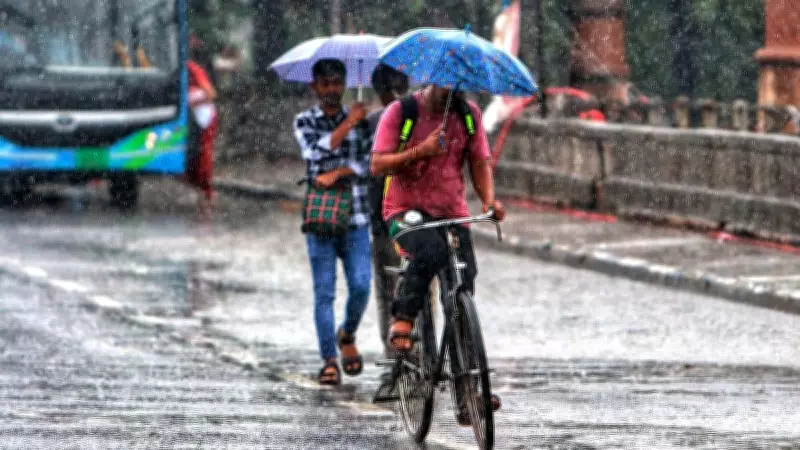
The India Meteorological Department (IMD) has officially declared the arrival of the southwest monsoon over Kerala, marking the beginning of the four-month rainy season in the country. According to the IMD, the monsoon is expected to deliver rainfall amounting to approximately 90% of the long-period average (LPA) this year, which is considered normal.
Monsoon Onset and Forecast
The onset of the monsoon over Kerala was announced on 4 June 2026, as per the IMD's latest update. The LPA for the southwest monsoon season, which lasts from June to September, is based on the average rainfall recorded from 1971 to 2020. A rainfall between 96% and 104% of the LPA is classified as normal. However, this year's forecast of 90% falls slightly below the normal range but still within the acceptable variability.
Implications for Agriculture and Economy
The monsoon is crucial for India's agricultural sector, as it supplies about 70% of the country's annual rainfall. A normal or near-normal monsoon is vital for the kharif crops, including rice, cotton, and sugarcane. The IMD's forecast suggests that while the rainfall may be slightly below average, it is unlikely to cause severe drought conditions. However, regional variations are expected, and some areas may experience deficit rainfall.

Economists and policymakers closely monitor the monsoon's progress, as it influences food prices, rural demand, and overall economic growth. A good monsoon can boost farm output and support the rural economy, while a weak monsoon can lead to inflationary pressures and impact GDP growth.
Monsoon Progress and Updates
The IMD will continue to provide updates on the monsoon's progress as it advances northward. Typically, the monsoon covers the entire country by mid-July. The department also issues forecasts for monthly and seasonal rainfall, as well as warnings for extreme weather events such as floods and cyclones.
This year, the IMD has also highlighted the possibility of above-normal rainfall in some parts of central and northern India, while southern and northeastern regions may receive below-normal precipitation. Farmers and authorities are advised to stay updated with the latest forecasts to plan agricultural activities and disaster preparedness accordingly.