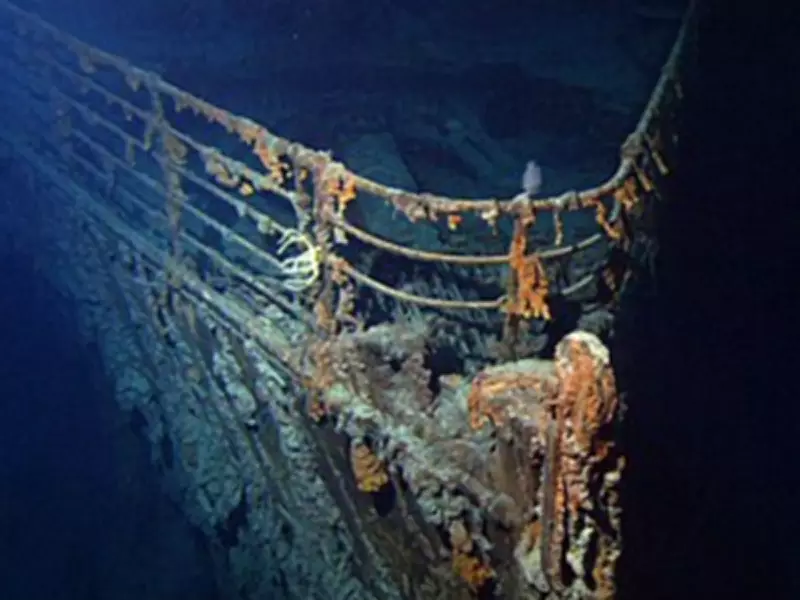
In 1985, the long and difficult search in the deep waters of the North Atlantic came to an end. The wreck of the RMS Titanic was discovered by a joint French-American expedition involving the Woods Hole Oceanographic Institution (WHOI) and the French Research Institute for Exploitation of the Sea (IFREMER). According to the National Oceanic and Atmospheric Administration (NOAA), this discovery rapidly transcended the status of a simple shipwreck. It became a global narrative encompassing history, science, and the public's enduring fascination with lost ships.
The Discovery: From Legend to Evidence
The discovery was the result of a planned oceanographic search, not an accidental sighting. It shifted the conversation from merely locating the ship to interpreting its historical significance for the public. From the outset, the wreck was perceived both as a public symbol and a critically important scientific site. This pivotal moment continues to influence how underwater heritage is discussed and managed today.
The technology employed in the search lent a historic air to the discovery. The expedition relied on the submersible Argo to reach the site for scientific purposes. During this first expedition, data was collected that enabled researchers to produce a preliminary map of the wreck. This mapping helped treat the Titanic as archaeological evidence, providing an exact record of its position and form rather than treating it as a mere salvage prize. Such information is precisely what underwater archaeologists value. The site was revealed as it had not been seen for over 73 years, and this revelation marked a significant shift. It demonstrated that the wreck could serve as historical evidence, not just a source of valuable artifacts.

Ethics of Underwater Archaeology
Even before it was found on the ocean floor, the Titanic was a legendary loss that captured the public imagination. After its discovery, the wreck was revisited by later expeditions and became part of a long story of exploration and preservation, according to a report from NOAA Ocean Exploration. The 1985 find was a major cultural event due to the ongoing attention it received.
People were deeply attached to what the ship symbolized: a luxury liner, a massive human tragedy, and a frozen moment in maritime history. The discovery made the ship feel present again in the modern world, even though it lay in pitch darkness, miles below the surface. Human ambition, tragedy, and endurance are the stuff of story, which saved the site from obscurity. Instead, it continues to command sustained attention from scientists, historians, and the public alike.
Why the Wreck Raised Ethical Questions
Although the Titanic's legend captured the public imagination, archaeological guidelines set clear limits on treasure-hunting. Underwater archaeology, according to NOAA Marine Protected Areas, is the study of submerged sites as unique places that contain important information about past human behavior, as revealed by the distribution and context of artifacts. These guidelines state that underwater heritage is not a renewable resource once it has been altered or its contents removed. This moved the debate forward globally. A famous wreck may attract commercial recovery teams, but archaeologists view any unscientific disturbance of a site as an irreplaceable loss. When the Titanic was discovered in 1985, the question of whether the site should be treated as a memorial to be left alone or a commercial target for salvage immediately became a difficult one.
A Lasting Presence on the Seafloor
The early maps altered the public's perception of the Titanic from myth to physical reality. WHOI states that the expedition's data allowed for a preliminary wreck map that helped shift the focus to archaeological interpretation. This map enabled researchers to speak of the Titanic as a real artifact. According to NOAA history, the 1985 discovery led to later scientific expeditions and surveys. Every new expedition left researchers with more questions about metal degradation, documentation techniques, and respect for the final resting place of those who died.

The 1985 breakthrough remains highly relevant in the field of archaeology today because the ship became a test case for how modern society values the past. In the end, the Titanic helped prompt a global debate about how underwater sites should be treated: whether the bottom of the deep ocean should be salvaged, studied, protected, or left undisturbed.