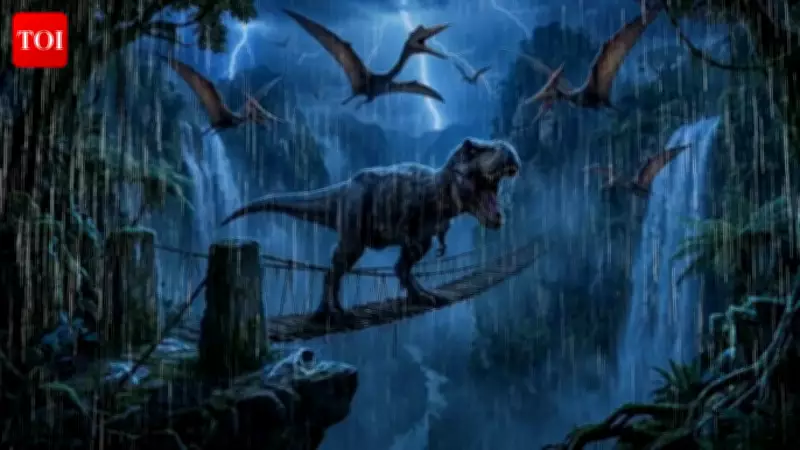
Imagine waking up to pouring rain that never stops—not for a week, not for a month, not even for a hundred years. Now scale that up to nearly two million years of almost nonstop humidity. This sounds like a meteorologist's nightmare or a monsoon survivor's joke, but scientists believe something like this actually happened on Earth around 234 million years ago. Strangely enough, it may have paved the way for dinosaurs to rule the world.
The Carnian Pluvial Episode
Experts call it the Carnian Pluvial Episode, or CPE. This was a period when the climate in the late Triassic period went haywire. Earth got soaked—not with endless rain every day, but definitely a long stretch of weird, wet, and stormy weather. It lasted about two million years, completely upending the environment and allowing dinosaurs to step into the center stage.
Earth Before the Soggy Drama
Before this wet episode, all the continents were packed together in one supercontinent called Pangaea. Most of the planet was bone-dry, hot, and full of sprawling deserts. Dinosaurs were already around, but they were small, rare, and not exactly winning any evolutionary contests. Other reptiles were the real stars. Then everything changed.

Volcanic Eruptions and Climate Shift
Scientists point to massive volcanic eruptions, specifically from the Wrangellia region, which stretched across what is now western North America. The eruptions pumped carbon dioxide and other gases into the sky. The greenhouse effect kicked in, the world warmed up, and the water cycle went into overdrive. Dry deserts turned damp, rivers surged, and flooding became the new normal. Rocks and fossils from all over the globe show clear changes in soils, plants, and carbon cycles, proving that something big was happening.
Impact on Life
For many living things, this was a catastrophe. Plant-eaters like rhynchosaurs, which used to thrive, suddenly struggled. Marine animals like ammonites and crinoids also took big hits. The old order was collapsing. But when one group fails, another gets a chance. Dinosaurs finally had their moment.
The Dinosaur Explosion
A major research paper outlined the connection between the rain crisis and the dinosaur explosion. Researchers studied fossils and dinosaur footprints in the Italian Dolomites and found a sudden spike in dinosaur activity right after the CPE. The timing is almost too perfect. Dinosaurs did not stumble into power slowly over tens of millions of years. Once their competitors thinned out, dinosaurs adapted quickly and spread fast. The wetter world brought new forests and reshaped habitats. With old rivals gone, dinosaurs found themselves in the right place at the right time. This was like evolution's version of a company shakeup: the old bosses disappeared, and the upstarts took over.
Dinosaur Diversification
Almost overnight—in geological terms—dinosaurs diversified: they grew larger, took new shapes, and went just about everywhere on Earth. That lucky streak lasted 165 million years, giving rise to everything from gentle giants with long necks to terrifying predators, and even today's birds.
Broader Effects of the CPE
The CPE was not just about dinosaurs. Early mammal relatives also began to spread, coral reefs changed, and the first sticky amber deposits—home to tiny ancient bugs—started appearing. Life on land and sea was shifting gears.
A Modern Lesson
Most people have heard of the asteroid that finished off the dinosaurs, but hardly anyone knows about the global rainstorm that helped launch their dynasty. Ironically, dinosaurs owe their rise less to steady conditions and more to chaos. Scientists studying the CPE point to evidence linking volcanoes, greenhouse gases, rapid climate changes, and the collapse or rise of entire ecosystems. While our own time is different, it is clear how the climate can completely reset life's direction. Because somehow, at some point in time, it just rained for two million years—well, almost—and that changed everything.