People often want clear answers right away, even though they can get them quickly. You can obtain a lot of information rapidly from search engines, social media, or instant advice. However, despite the fast pace, many individuals remain uncertain about the important choices they face in life.
This uncertainty arises because not all knowledge is the same. Some things can be learned quickly, while others require time, thought, and real-life experience to fully comprehend. The difference between quick information and deep understanding is a topic often explored in traditional wisdom. French proverbs, known for their profound and reflective tone, discuss ideas that mature over time. Instead of jumping to conclusions, they encourage patience and careful consideration. One such proverb offers a simple yet significant insight about truth and its discovery.
The Meaning of the French Proverb
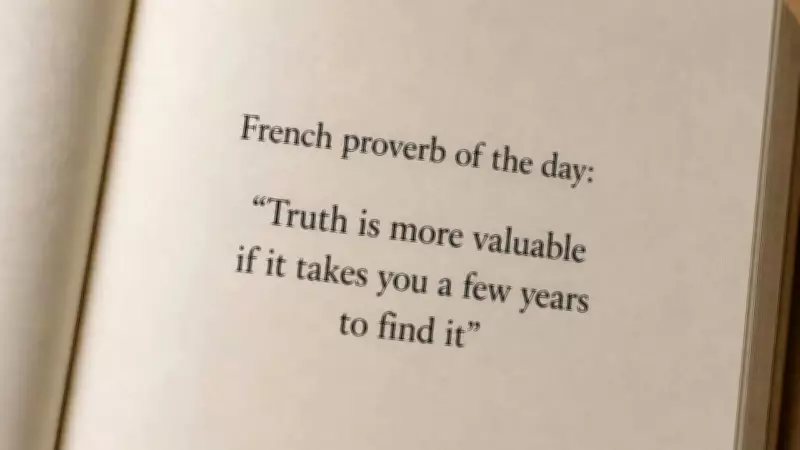
The saying "Truth is more valuable if it takes you a few years to find it" implies that understanding gained over time holds greater importance. It shows that truth becomes stronger and more reliable when people invest time in learning, questioning, and living life. At first glance, the saying might seem paradoxical, suggesting that delayed discovery enhances value. However, in context, the meaning becomes clear. The proverb does not advocate procrastination in learning; rather, it emphasizes the process of discovery. Truth that emerges from years of experience, mistakes, and reflection is often deeper than something understood instantly.

Why Time Plays an Essential Role in Understanding
Some things, like facts or basic information, can be learned quickly. But true understanding usually takes time. It involves thinking, observing, and synthesizing different experiences. For instance, lessons about relationships, career, or personal growth are not always learned in a short period. They develop gradually through experiences. That is why the proverb links time and value: the more time spent learning, the better the understanding.
The Difference Between Information and Truth
In today's world, people are surrounded by vast amounts of information. However, information is not always equivalent to truth. Information can be changeable, biased, or incomplete. Truth, on the other hand, holds enduring value. It is often shaped by personal experiences and reflection. The proverb highlights that truth is not always found immediately; it may take years of learning and understanding before it becomes clear.
How Patience Contributes to Better Decisions
Patience allows people to think carefully before making decisions. Instead of jumping to conclusions, they take time to understand the situation. This approach reduces mistakes and leads to better outcomes. Those who rush may miss important details. Taking time helps consider different perspectives. The proverb teaches patience by showing that valuable knowledge often requires time to develop.
Relevance of the Proverb in Modern Life
In today's fast-paced world, people often expect quick results. They prefer instant answers and sometimes fail to see the value of waiting. However, this mindset can lead to shallow understanding. Many important decisions, such as choosing a career or a life partner, require time and thought. The proverb remains relevant because it reminds people that not everything can or should be understood immediately. Some truths only emerge over time.
Learning Through Experience and Reflection
Understanding truth requires experience. People learn from both successes and failures. Reflecting on these experiences deepens understanding. By contemplating past actions and their consequences, individuals gain profound insights. The proverb illustrates that truth is more valuable when it is connected to real-life events.
Why Quick Answers Are Not Always Reliable
Quick answers may seem helpful, but they are not always accurate or complete. Complex problems often require careful thought and time. Relying solely on readily available information can lead to misunderstandings. Taking time to investigate and verify information makes it more reliable. The proverb advocates for slow, careful learning to achieve better understanding.

Finding a Balance Between Speed and Depth
Patience does not mean inaction. The key is to balance speed with thoughtful consideration. Some decisions can be made quickly, while others require more time. Knowing the difference helps make better choices. The proverb encourages valuing understanding over speed.
A Simple Takeaway from the French Proverb
The message is clear: truth discovered over time is often more valuable and trustworthy. Taking time to learn and reflect leads to better understanding and improved decision-making. The French saying "Truth is more valuable if it takes you a few years to find it" offers a thoughtful perspective on learning and understanding. It shows that finding truth requires time, patience, and experience. This idea brings balance to a world focused on speed, reminding people that deep understanding often grows and strengthens over time.
The lesson is simple: truth acquired through experience and contemplation holds lasting significance and facilitates better decisions in life.