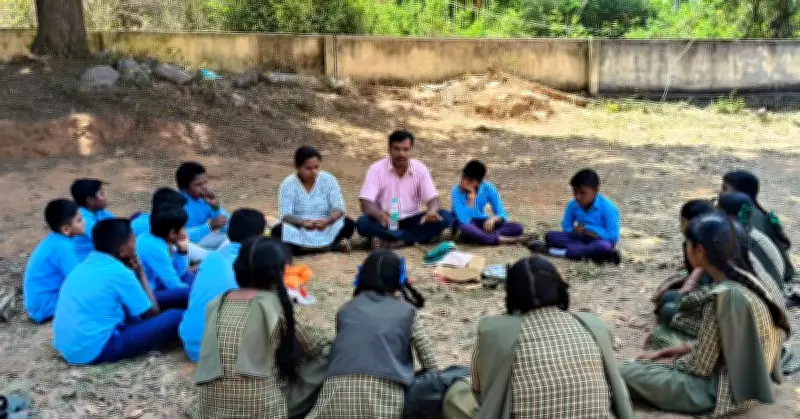
In the town of Gubbi in Karnataka, two farmers have transformed their surroundings into a lush green corridor, setting an example for sustainable agriculture and environmental conservation. Geeta (37) and Yatish (47), longtime friends and farmers, were deeply troubled by the rapid loss of greenery in their region. Having grown up under the shade of large trees, they held fond memories tied to the natural landscape that was slowly disappearing.
The Motivation Behind the Green Corridor
The changing landscape in Gubbi was difficult for Geeta and Yatish to accept. They decided to take matters into their own hands and restore the ecological balance. Their mission was to create a green corridor that would not only bring back native trees but also promote sustainable farming practices among the local community.
Planting Native Trees
The duo began by planting a variety of native tree species along the roadsides and on their own farmland. They selected trees that were once abundant in the area but had vanished due to urbanisation and monoculture farming. Over time, their efforts attracted birds, insects, and small animals, reviving the local biodiversity.

Converting Arecanut Waste into Fertiliser
In addition to planting trees, Geeta and Yatish developed a method to turn arecanut waste into nutrient-rich fertiliser. Arecanut husks and other byproducts, which are often discarded or burned, were processed and converted into organic fertiliser. This not only reduced waste but also provided a sustainable alternative to chemical fertilisers for local farmers.
Impact on the Community
Their initiative has inspired other farmers in Gubbi to adopt similar practices. The green corridor now serves as a model for ecological restoration in the region. Geeta and Yatish conduct workshops to teach others how to prepare fertiliser from arecanut waste and the importance of planting native trees. Their work has been recognised by local environmental groups and agricultural authorities.
Challenges and Future Plans
Despite the success, the farmers faced challenges such as water scarcity and initial resistance from the community. However, their persistence paid off. They now plan to expand the green corridor to cover more areas and involve more farmers. They also aim to set up a small nursery to distribute native saplings at low cost.
The story of Geeta and Yatish is a testament to how individual efforts can lead to significant environmental change. By combining traditional knowledge with innovative waste management, they have created a greener, healthier future for Gubbi.