

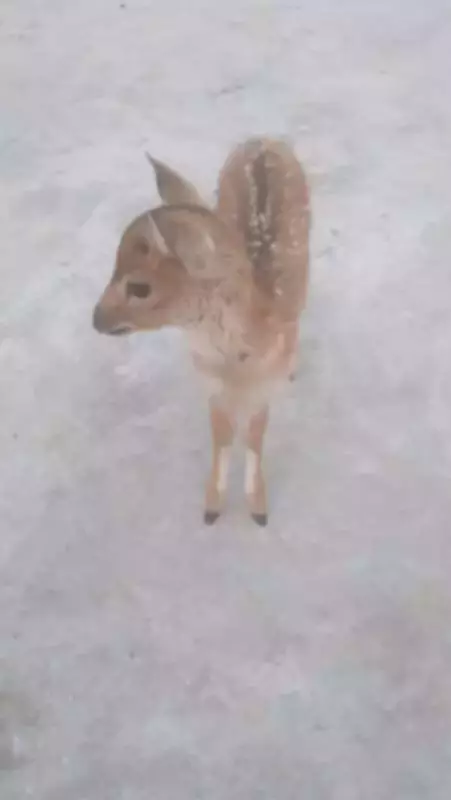
Conservationists Face Delicate Task Hand-Rearing Chital Fawn in UP's Kishenpur Sanctuary
In the dense wildlife regions of Uttar Pradesh, conservationists are confronting one of their most challenging tasks: hand-rearing young animals while carefully preserving their natural survival instincts. A poignant example of this delicate balance is currently unfolding at the Kishenpur Wildlife Sanctuary, where a chital fawn, not even one month old, has become the center of a dedicated rescue effort.
Discovery and Initial Challenges
The forest staff first noticed the young fawn moving in close proximity to the forest campus. "Every time that we guided it back to the forest, it would come back," explained Ayub Khan, the range officer at Kishenpur who is now personally hand-rearing the fawn. This persistent return raised immediate concerns among the officials.
Initial efforts were made to locate the mother deer, but these proved unsuccessful. The mother never appeared to search for her offspring, leading conservationists to presume she may have fallen victim to a tiger attack. This theory is particularly plausible given Kishenpur's status as the core area of the Dudhwa Tiger Reserve, which boasts a notably high tiger density.

Rescue and Care Strategy
Believing the fawn approached humans seeking protection, the staff attempted to introduce it to potential surrogate mothers among other female deer. However, as Raja Mohan, director of the Dudhwa Tiger Reserve, noted, "Deer do not show such sentiments like primates or elephants." When these natural integration attempts failed, the decision was made to formally rescue and care for the orphaned animal.
Range officer Ayub Khan has taken the fawn into his quarter, where it is being fed goat milk through a bottle. Yet, in a crucial move to maintain its wild instincts, the fawn is released each evening to roam the campus freely. This practice aims to prevent excessive human imprinting that could compromise its future survival in the wild.
Future Plans for Rehabilitation
The officials have made a conscious decision against sending the fawn to a zoo. Instead, they plan to release it back into its natural habitat once it becomes self-sufficient. "We will try to integrate it with some herd of deer where it can live like it should," Director Raja Mohan emphasized, outlining their long-term rehabilitation strategy.
This case highlights the complex challenges wildlife conservationists face in balancing immediate animal welfare with the preservation of natural behaviors essential for long-term survival in India's protected forest areas.

