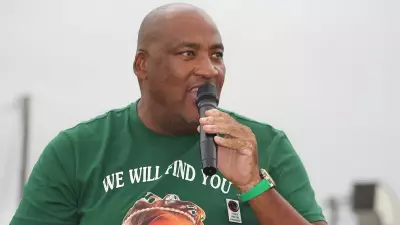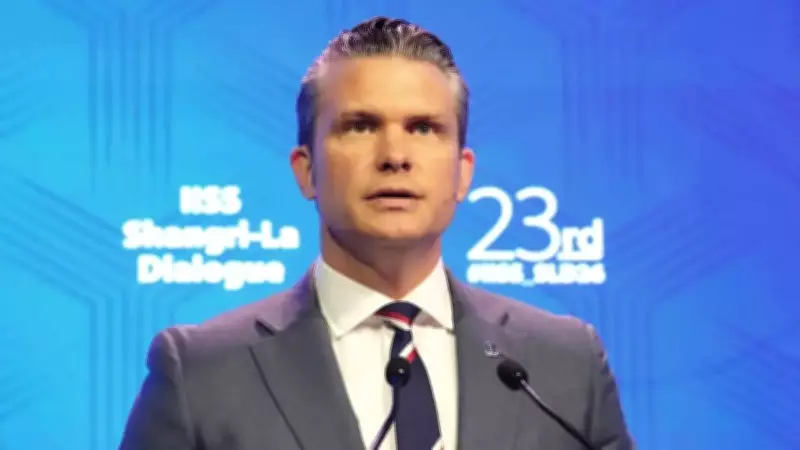
NEW DELHI: US Defence Secretary Pete Hegseth declared India a powerful and modernising military force, placing New Delhi at the centre of Washington's Indo-Pacific strategy during his address at the Shangri-La Dialogue in Singapore on Saturday. He praised India's growing military capabilities and expanding strategic role in maintaining regional balance.
India as a Critical Anchor
Addressing delegates, Hegseth stated, "India is powerful and modernising its military," and emphasised New Delhi's importance in the broader Indo-Pacific security architecture. He noted, "In South Asia, India is a critical anchor to hold the line. A powerful India acting in its own self-interest advances our shared goal of maintaining a balance of power across the region."
Defence Capabilities and Industrial Growth
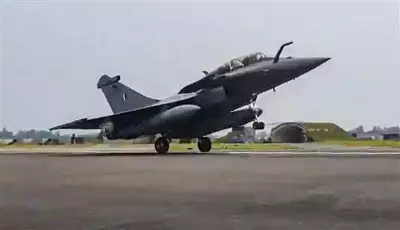
The Pentagon chief commended India's efforts to strengthen its defence capabilities, highlighting that the country was "building a heavy industrial and logistics capacity to sustain high-end military operations." He underscored expanding defence cooperation between Washington and New Delhi, including co-production initiatives to boost military readiness. "We've also committed to pursuing co-production with India to advance capabilities like Javelin anti-tank guided munitions. Real, tangible steps to improve the collective readiness of our forces," Hegseth said.

Linking India's defence-industrial growth to wider regional security objectives, he added, "This kind of industrial muscle isn't just a long-term goal, it's an immediate operational imperative."
US Defence Spending and Manufacturing Mobilisation
Hegseth outlined the Trump administration's plans to significantly increase defence spending and manufacturing capacity. "America is undergoing a historic national manufacturing mobilisation of our defence industrial base. We will produce the best weaponry in the world at scale, at speed, and at a reasonable price," he said, calling it a personal commitment and a demand from President Trump.
Referring to US President Donald Trump, Hegseth noted, "President Trump, after spending $1 trillion on defence last year, plans to make a generational investment of $1.5 trillion on defence this year, to unleash America's arsenal of freedom and expand America's military dominance for decades to come."
Call for Allied Defence Spending
Hegseth urged America's allies and partners to increase their defence spending and capabilities, demanding 3.5 per cent of GDP. "We expect every single ally and partner to match that kind of resolve," he said. He signalled deeper engagement with countries willing to shoulder greater security responsibilities, stating, "For those nations that rise to this challenge, that embrace responsibility as true partners, the benefits will be clear." He added that model allies would be prioritised and moved to the front of the line.
Broader Regional Dynamics
Touching on broader security dynamics, Hegseth reviewed defence ties with Japan, South Korea, ASEAN members, and Australia. He stressed that the Indo-Pacific remains the world's most consequential region and argued that regional security relies heavily on American military power, while urging partner nations to invest more in their own defence.
On China, Hegseth said US-China relations had improved under President Trump but maintained that "no state, including China, can impose hegemony and hold the security of our nation and allies in question."
Context and Forum
His remarks came amid ongoing conflicts in West Asia and Europe, as well as growing debate over Washington's long-term strategic priorities in the Indo-Pacific. The Shangri-La Dialogue, one of Asia's premier security forums, entered its second day on Saturday, bringing together senior defence and government officials from 44 countries.