The latest escalation in the US-Iran conflict began when US defence secretary Pete Hegseth publicly signalled a new military offensive against Tehran. Speaking from US Central Command headquarters in Florida, Hegseth warned that forthcoming strikes would be 'strong' and 'clear', adding that key facilities in Iran would be targeted. He argued that the operation would not only advance US military interests but also strengthen Washington's negotiating position.
Trump's Warning and US Strikes
President Donald Trump simultaneously warned Iran that further attacks would follow unless a peace agreement was reached. US Central Command later confirmed that American forces had launched additional strikes against multiple targets in Iran. The military said the attacks were ordered by Trump and were conducted in response to what it described as Iran's 'unwarranted and continued aggression'. Hegseth indicated that the campaign could extend beyond a single night, reinforcing the prospect of sustained military pressure on Tehran.
Iranian Air Defenses and Explosions
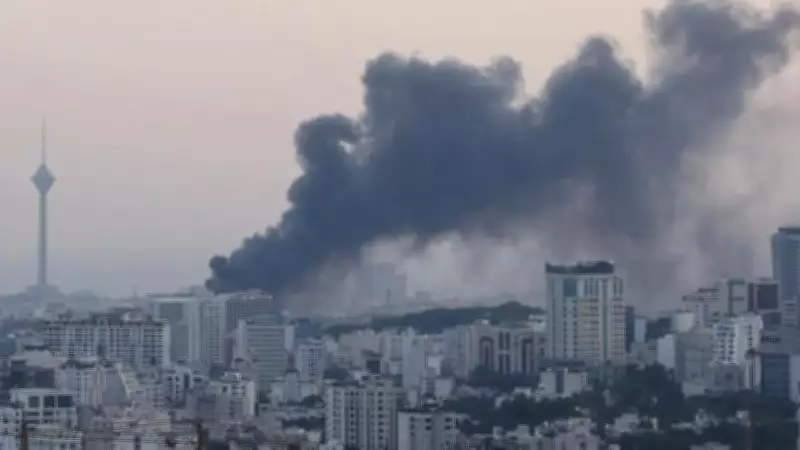
Following the strikes, Iranian media reported a series of explosions and defensive operations across the country. Air defence systems were activated in western Tehran and Fars province, while explosions were reported in Bandar Abbas, Sirik, Minab, Kangan, Gorgan and Karaj. Additional blasts were reported on Qeshm and Hengam islands, with Iranian state media saying military projectiles were responsible. The widespread incidents suggested that the US operation had affected multiple regions, particularly around the strategically important Strait of Hormuz.

Iran's Political Response
Iran responded with a series of political and military warnings. Foreign Ministry spokesperson Esmaeil Baghaei accused the United States of deliberately targeting civilian water infrastructure in Sirik, alleging that reservoirs supplying drinking water to more than 20,000 residents had been destroyed. He described the attack as 'a calculated war crime and a flagrant violation of human rights and international humanitarian law'. Senior Iranian officials also warned that any future conflict would not remain confined to the Middle East.
Naval Clashes and Strait Closure
Attention soon shifted to the Strait of Hormuz, where Iranian media reported clashes between US naval forces and units of the IRGC Navy. According to Mehr news agency, exchanges of fire occurred in the waterway while US forces struck several coastal locations, including areas around Bandar Abbas, Sirik, Qeshm Island and Hengam Island. The IRGC also claimed its air defence systems had forced an F-16 fighter jet to retreat after firing a missile at the aircraft over Gulf airspace. The most consequential development came when Iran's top joint military command announced the closure of the Strait of Hormuz. The military ordered all vessels, including oil tankers and commercial ships, to stay out of the waterway and warned that any vessel attempting passage would be targeted.
Retaliatory Attacks and Regional Impact
Shortly afterwards, Iran's semi-official Tasnim news agency reported that the IRGC Navy had fired upon two vessels that allegedly tried to transit the strait despite the restrictions. The claims could not be independently verified, but the reports intensified fears over disruptions to one of the world's most important energy corridors. As tensions mounted, Bahrain issued a public warning after air raid sirens sounded across the country, urging residents to seek shelter. Soon afterwards, the IRGC announced a retaliatory military operation against US forces in the region. According to Tasnim, Iran's Aerospace Force and Navy launched a two-wave strike targeting 18 installations at bases hosting American troops. The operation was presented as retaliation for the US attacks on Iranian territory.
Broader Implications
The rapid succession of US strikes, Iranian retaliation, widespread explosions, reported naval clashes and the closure of the Strait of Hormuz has pushed the region into one of its most dangerous confrontations in recent years. With both sides signalling readiness for further action and maritime traffic facing unprecedented threats, the crisis has raised fresh concerns about regional stability, global oil supplies and the possibility of a broader war.