

From Rural Struggle to Environmental Revolution: The Wangari Maathai Story
In the rural landscapes of Kenya during the 1970s, environmental degradation was not an abstract concept discussed in distant policy meetings. It manifested as the exhausting daily reality of women walking increasingly longer distances to gather diminishing firewood. It appeared as the anxiety of finding clean drinking water from wells that were drying up. It showed itself in shrinking agricultural plots that could no longer adequately feed growing families. This was the tangible crisis that Wangari Maathai encountered and decided to confront with one of nature's simplest solutions: planting trees.
The Practical Origins of a Continental Movement
Long before receiving international recognition as a Nobel laureate, Wangari Maathai was listening intently to the practical concerns voiced by rural Kenyan women. Their worries centered on fundamental survival needs: insufficient firewood for cooking, contaminated drinking water sources, inadequate food supplies, and unstable household incomes. Born in Nyeri, Kenya in 1940, Maathai had pursued advanced education in biology in the United States before earning her doctorate at the University of Nairobi, where she broke barriers as one of the first female academics in her field. However, her most significant education emerged from observing Kenya's changing landscape firsthand.
Maathai witnessed forests being systematically cleared for commercial plantations, watching as soil erosion and deforestation made daily existence progressively more difficult for rural communities, particularly affecting women who bore primary responsibility for household resource gathering. This direct connection between environmental destruction and human suffering became the foundational principle of her life's work. In 1977, while actively participating in Kenya's National Council of Women, Maathai proposed a straightforward initiative: organizing local women's groups to plant trees.

The Green Belt Movement Takes Root
What began as a practical response to environmental loss rapidly evolved into the Green Belt Movement, a grassroots organization dedicated to restoring degraded lands while simultaneously improving community livelihoods. The movement spread organically through villages because its premise aligned perfectly with lived experience: trees could provide sustainable fuel sources, prevent soil erosion, protect watersheds, and create economic opportunities through fruit production and other benefits.
The Green Belt Movement did not originate as a grand environmental slogan but rather as a visible, tangible solution that communities could implement and witness producing results. Maathai's revolutionary insight was recognizing that environmental harm never exists in isolation. When forests disappear, women's workloads increase dramatically as they travel further for wood. When soil quality deteriorates through erosion, agricultural harvests diminish. When water sources become contaminated or depleted, families face health and economic consequences.
Environmental Action as Political Resistance
As the movement expanded, it naturally transformed into a school of civic empowerment. Thousands of ordinary citizens, particularly women, became mobilized and gained agency through environmental stewardship. The work gradually broadened beyond tree planting alone as Maathai articulated that responsible environmental care could not be separated from democratic governance and human rights. This perspective brought her into direct conflict with Kenyan authorities, resulting in harassment, physical assaults, and imprisonment.
In her Nobel Peace Prize lecture, Maathai explained that the Green Belt Movement responded directly to needs identified by rural women, selecting tree planting specifically because it was simple, achievable, and capable of producing visible results relatively quickly. She effectively transformed ecology from an academic discipline into a practical survival strategy and a form of political resistance.

A Legacy Measured in Millions of Trees
The Green Belt Movement's impact extended far beyond Kenya's borders. During the 1980s, the initiative spread to multiple African countries where women organized to plant millions of trees. According to Nobel Foundation records, the movement facilitated the planting of over 30 million trees, while the Green Belt Movement's own contemporary estimates suggest approximately 51 million trees have been grown through its networks. These varying figures likely reflect different counting methodologies and time periods but collectively demonstrate the extraordinary scale achieved from modest beginnings.
This scale mattered profoundly because the project transcended narrow reforestation objectives. The Green Belt Movement today continues working through multiple interconnected approaches: tree-growing initiatives, environmental advocacy campaigns, community empowerment programs, sustainable livelihood development, and climate resilience building. Its mission remains rooted in Maathai's original logic: simultaneously restoring land, strengthening communities, and protecting future generations.
Nobel Recognition and Enduring Influence
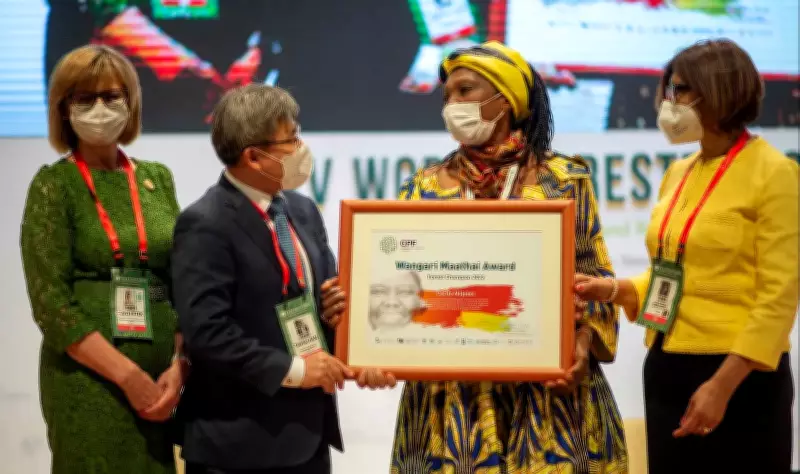
In 2004, Wangari Maathai made history as the first African woman to receive the Nobel Peace Prize, recognized specifically for her contributions to sustainable development, democracy, and peace. Significantly, she became the first individual to win the Peace Prize primarily for environmental work. This recognition captured the comprehensive nature of her legacy: she refused to separate environmental conservation from political engagement, women's rights from public participation, or tree planting from peacebuilding efforts.
Although Maathai passed away in 2011, her influence continues expanding. The Green Belt Movement persists in its core mission of tree planting, advocacy, and community action. The United Nations Environment Programme has credited Maathai as a primary inspiration for the Billion Tree Campaign, which subsequently motivated billions of plantings worldwide. Beyond quantifiable achievements, her deeper legacy resides in the powerful idea that environmental restoration can begin with individual action—one person, one seedling, and one determined refusal to accept ecological decline as inevitable destiny. Wangari Maathai's extraordinary gift was making hope feel practical, achievable, and rooted in the very soil she worked to protect.
