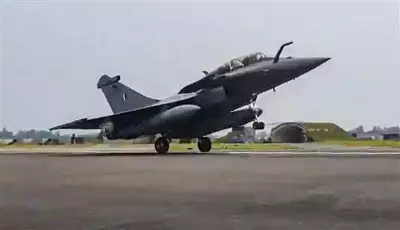
The AGM-114 Hellfire missile has drawn renewed attention after the United States military released footage of a precision strike on the Botswana-flagged oil tanker M/T Lexie in the Persian Gulf. According to US Central Command (CENTCOM), the tanker was intercepted while heading toward Iran's Kharg Island, the country's main oil terminal. The US military alleged that the vessel ignored repeated warnings, prompting US aircraft to strike the engine room, disabling the tanker without sinking it. This incident marks the latest flashpoint in the ongoing conflict between Washington and Tehran.
Evolution of the Hellfire Missile
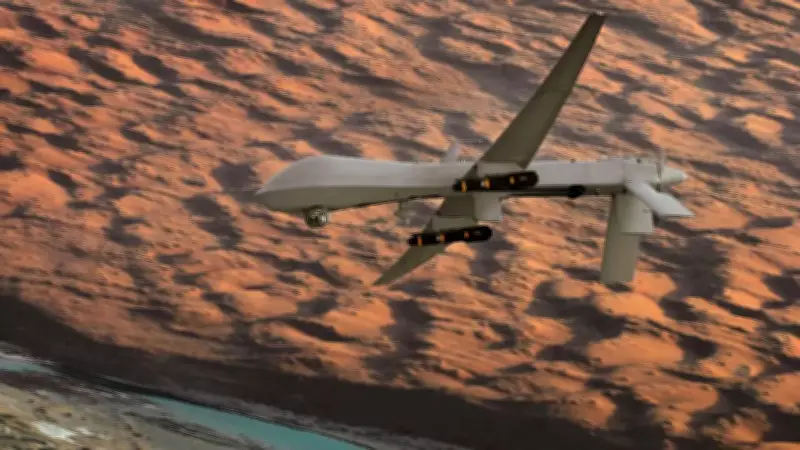
The AGM-114 Hellfire, manufactured by Lockheed Martin, is a precision-guided air-to-surface missile. Originally designed during the Cold War to destroy the Soviet Union's vast tank armies, the missile has evolved into a multirole weapon capable of engaging a wide variety of targets with exceptional accuracy. The Hellfire entered service in 1984 and has been extensively used from Apache helicopters since then. The rise of armed drones after the 9/11 attacks transformed the missile's role, with Predator and Reaper drones carrying Hellfires in operations across Iraq, Afghanistan, Syria, and Yemen.
Key Specifications
- Length and Weight: The missile is approximately 1.63 meters (64 inches) long and weighs between 45 kg and 49 kg, depending on the variant.
- Propulsion: It uses a solid-fuel rocket motor for propulsion and reaches speeds of Mach 1.3 (1,600 km/h).
- Range: Depending on the variant, the Hellfire can engage targets between 7 km and 11 km away.
- Warhead: The missile carries an 8-9 kg warhead of different types, including HEAT anti-tank, blast-fragmentation, and thermobaric warheads for different mission requirements.
- Guidance: The missile uses semi-active laser guidance and millimeter-wave radar for precision targeting.
- Platforms: It can be fired from a wide range of platforms, including Apache helicopters, Predator drones, Reaper drones, fixed-wing aircraft, naval vessels, and ground-based launchers.
Precision in Modern Conflict
Modern conflict increasingly demands accurate strikes with limited collateral damage. Rather than destroying the vessel outright, the recent strike on the M/T Lexie tanker only disabled a critical component. This illustrates why, even after 40 years in service, the Hellfire remains a mainstay of the US military arsenal. It bridges the gap between destructive power and precision, ensuring its continued relevance on the battlefield.