

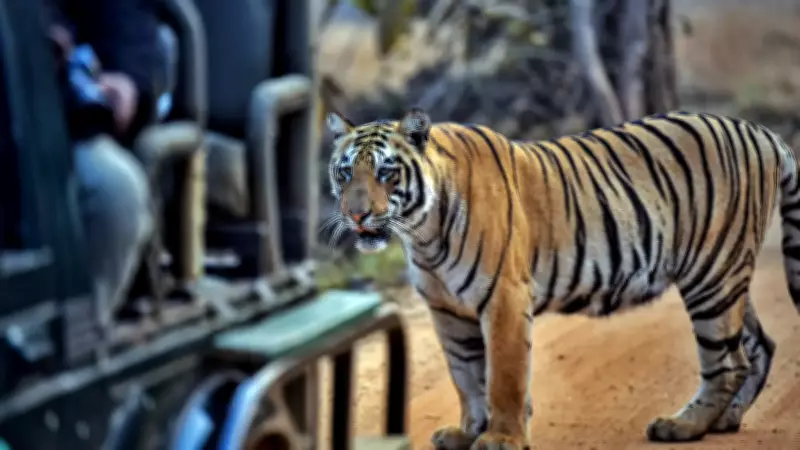
Five months, 32 dead tigers and not nearly enough answers. The recent spate of big cat deaths in Madhya Pradesh, including a tigress and her four cubs in Kanha, has once again put the spotlight on the state's famed tiger reserves. However, the real story behind the rising big cat toll may lie not inside their protected boundaries, but outside them.
Human-Wildlife Conflict Outside Core Areas
Forest officials said the most recent deaths have occurred outside core reserve areas, where expanding tiger populations are increasingly colliding with human-dominated landscapes. Here, crude electric wire traps — often laid illegally to kill wild boar and other animals for bushmeat or to protect crops — are emerging as one of the biggest threats to big cats.
Shift from Poaching to Electrocution
Officials said poaching networks once linked to international wildlife trade syndicates have largely been dismantled. In their place, however, a more localised and difficult-to-monitor threat has spread across the state. Electrocution now lies at the centre of the changing pattern of tiger deaths.

The problem is particularly acute in areas where tiger habitats overlap with agricultural land. Farmers often set up electric fences to protect their crops from wild animals, but these wires can also kill tigers that wander into the fields. In many cases, the wires are not intended to harm tigers but are set up for wild boar or deer. Nevertheless, they pose a lethal danger to the big cats.
Officials are now grappling with how to address this issue. One approach is to work with local communities to find alternative methods of crop protection that do not involve electric wires. Another is to increase patrolling and enforcement to deter illegal trapping. However, the scale of the problem is daunting, as the traps are easy to set up and hard to detect.
Conservationists argue that the rising tiger toll highlights the need for a broader strategy that goes beyond protecting core reserves. Tigers are increasingly moving into human-dominated areas, and without measures to mitigate conflict, the death toll is likely to rise further. The challenge is to balance the needs of a growing tiger population with the livelihoods of local communities.






