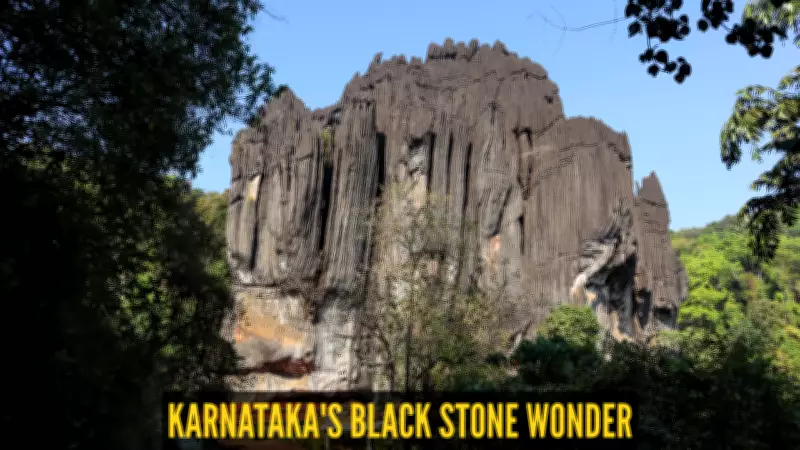
Yana: A Landscape from Another World
Nestled in the Western Ghats of Karnataka, Yana presents a surreal terrain that feels extraterrestrial. Massive dark rock formations rise abruptly from a lush green forest, steeped in ancient tales of deities and demons. For centuries, pilgrims, trekkers, and curious travelers have ventured into this isolated pocket of Uttara Kannada district to witness one of South India's most bizarre natural wonders. Here, geology, local myth, and wilderness collide brilliantly.
A Land of Giant Black Rocks
Located roughly between Kumta and Sirsi, Yana is famed for its pair of black limestone monoliths: Bhairaveshwara Shikhara and Mohini Shikhara, reaching heights of about 120 meters and 90 meters respectively. These towering stones create a theatrical backdrop unique in the Western Ghats. The stark contrast of black peaks against green forest captivates photographers and nature enthusiasts. In April 2026, Yana was designated a Geo-heritage Site of National Importance, highlighting its geological value and ensuring its protection.
Why Is Yana Like This?
Science explains Yana's formation through erosion, but local folklore offers a more dramatic narrative. According to Hindu myth, the demon king Bhasmasura, after severe penance, received a boon from Lord Shiva that allowed him to turn anyone to ashes by touching their head. Arrogant, he tried to test it on Shiva. Lord Vishnu intervened by transforming into the enchanting Mohini and luring the demon into a dance. When Mohini touched her own head, Bhasmasura mimicked her, triggering his boon and reducing himself to ashes. The heat from his fiery end is said to have scorched the rocks black. The monoliths were named after Shiva's Bhairava form and Vishnu's Mohini avatar.

Millions of Years in the Making
Geologically, Yana's monoliths are ancient limestone carved by rain, wind, and erosion over millions of years. The black tint comes not from the rock itself but from lichens and microorganisms thriving in the humid climate. Honeybee nests, dense rainforest plants, and the hum of birds and insects add to the intense atmosphere.
A Sacred Cave Beneath the Rock
At the foot of Bhairaveshwara Shikhara lies a cave temple housing a self-manifested Shiva Linga, with water continuously dripping onto it. The dimly lit cave offers a spiritual shift from the exterior. During Maha Shivaratri, thousands of devotees transform the tranquil forest into a vibrant celebration.
The Journey Here
From the car park, a trail through thick foliage leads to the monoliths. The route is gentle initially, but the final leg involves several hundred stone steps. The climb offers glimpses of the black rocks and sweeping canopy views.
How to Reach Yana
- By rail: Kumta Railway Station on the Konkan Railway is about 25 km away.
- By road: 25 km from Kumta, 40 km from Sirsi, and 50 km from Gokarna. Taxis or two-wheelers are common.
- By air: Hubballi Airport is the nearest, but Goa airports are convenient for combining with a coastal trip.
What to Do at Yana
- Explore the monoliths: Striking photo opportunities.
- Visit the cave temple: Spiritual and architectural significance.
- Enjoy the forest trek: Through biodiverse Western Ghats.
- Spot wildlife and birds: Various species and butterflies.
- Combine with nearby attractions: Vibhooti Falls or Gokarna's beaches and temples.
Best Time to Visit
The ideal period is October to March when weather is pleasant. Monsoons (June to September) make the area lush but paths slippery and access may be restricted.