When North Dakota farmer Randy Fyllesvold died unexpectedly in a car crash in September 2025, his family was left grieving while also confronting an overwhelming reality. Approximately 1,400 acres of corn and soybeans remained unharvested as winter weather began to close in. For farming families, missing the narrow harvest window can mean devastating financial losses. Randy's wife, Kharra, and their children suddenly faced both personal tragedy and the potential loss of an entire season's work. What happened next became a remarkable example of rural community solidarity in times of crisis.
The Neighbors' Effort That Saved 1,400 Acres
Shortly after Randy's death, two close friends, Wyatt Thompson and Andy Gates, decided the family would not face the harvest alone. They began contacting neighboring farmers across nearby North Dakota communities, asking if anyone could spare equipment, trucks, or time to help bring in the crops. The response was immediate.
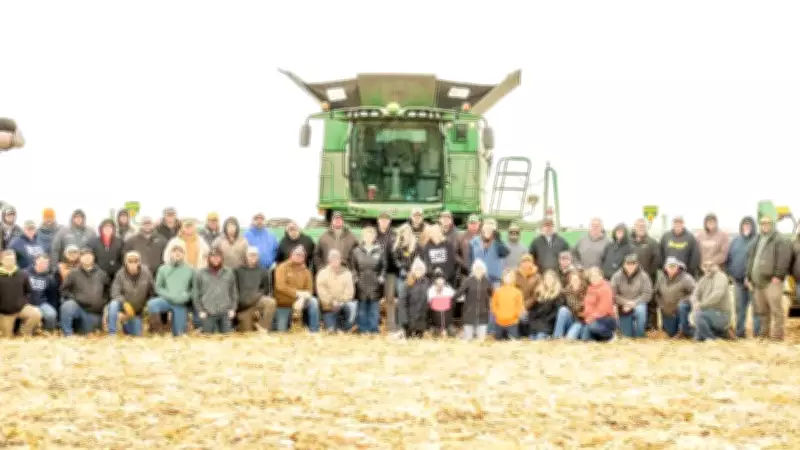
Within days, around 75 farmers arrived with combines, grain carts, and trucks, ready to work through the fields together. What could have taken weeks for one family to complete quickly turned into a coordinated community effort. According to local reports, the volunteer operation included roughly 12 combines, seven grain carts, and more than 40 trucks. Farmers traveled from more than 10 nearby towns, bringing their own fuel, machinery, and labor without asking for payment.

For two days, the fields remained busy almost nonstop as equipment moved in organized lines through the crops. The operation resembled a professional large-scale harvest, yet every person involved had volunteered simply to help a grieving family. Some social media posts later described the scene as involving 42 trucks, though local coverage generally reported the number as more than 40.
Why Timing Mattered So Much
Harvest season in the northern United States is heavily dependent on weather. Once snow, freezing temperatures, or wet ground arrive, crops can quickly deteriorate or become impossible to collect efficiently. For the Fyllesvold family, the stakes were enormous. The 1,400 acres represented not just crops in a field but an entire year of labor, investment, and income. Losing the harvest would have created severe financial pressure on top of an already devastating personal loss. That urgency is one reason so many farmers immediately understood the need for action.
'To Know Randy Was to Love Randy'
Friends described Randy Fyllesvold as someone deeply respected in the local farming community. Several volunteers later explained that helping the family felt like a natural response because of the kind of person he had been. One friend summed up the feeling shared across the community by saying, 'To know Randy was to love Randy.'
Kharra Fyllesvold later described watching the combines and trucks fill the fields as emotional and overwhelming. For her family, the harvest became more than a farming operation. It became a public demonstration of support during one of the hardest moments of their lives.
A Story That Resonated Far Beyond North Dakota
After local television coverage and social media posts began circulating online, the story quickly spread across the country. Many people were moved not only by the scale of the volunteer effort but by what it represented. In many rural farming communities, neighbors still depend heavily on one another during emergencies, accidents, and natural disasters. While modern farming often relies on advanced machinery and technology, stories like this continue to highlight the strong personal bonds that exist behind the industry. For many readers, the image of dozens of combines and trucks arriving to save a grieving family's harvest stood as a rare reminder of collective kindness and solidarity in difficult times.