

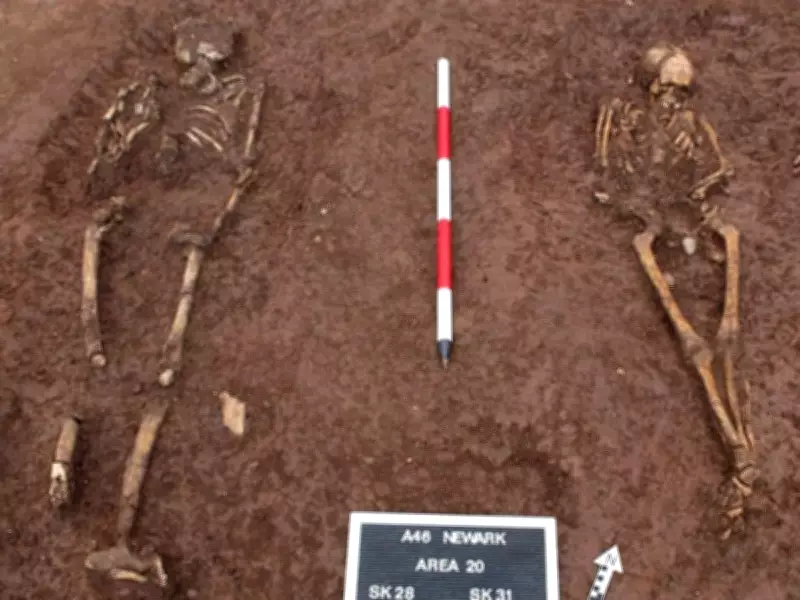
Workers expanding a highway in the United Kingdom have made an extraordinary archaeological discovery, unearthing graves, a Roman well, and an Anglo-Saxon house that together span approximately 8,000 years of human history. The find occurred during construction for the A14 road widening project in Cambridgeshire, a region known for its rich archaeological heritage.
Mesolithic Graves and Early Settlements
The oldest artifacts discovered date back to the Mesolithic period, around 8,000 years ago. Archaeologists identified several graves containing human remains, along with flint tools and animal bones that provide insight into the lives of early hunter-gatherers. These findings suggest that the area was a significant settlement or burial ground for ancient communities.
Roman Well and Infrastructure
From the Roman era, a well-preserved well was uncovered, complete with timber lining and artifacts such as pottery and coins. This well likely served a nearby Roman settlement or farmstead, indicating that the area was inhabited during the Roman occupation of Britain. The discovery adds to the understanding of Roman water management and daily life in the province.

Anglo-Saxon House and Daily Life
An Anglo-Saxon house, dating from the 5th to 11th centuries, was also found. The structure, with its post holes and hearth, offers a glimpse into early medieval domestic architecture. Artifacts including pottery, tools, and animal remains suggest that the inhabitants engaged in farming and craft activities.
Archaeologists from the Oxford Archaeology East team have been working alongside construction crews to document and preserve the finds. The project is part of a larger effort to study the historical landscape before the highway expansion is completed. The discoveries will be analyzed further to uncover details about trade, diet, and burial practices across different periods.
This remarkable site highlights the deep historical layers present beneath modern infrastructure. The findings will eventually be curated for public display, allowing people to connect with the ancient past revealed by the highway project.






