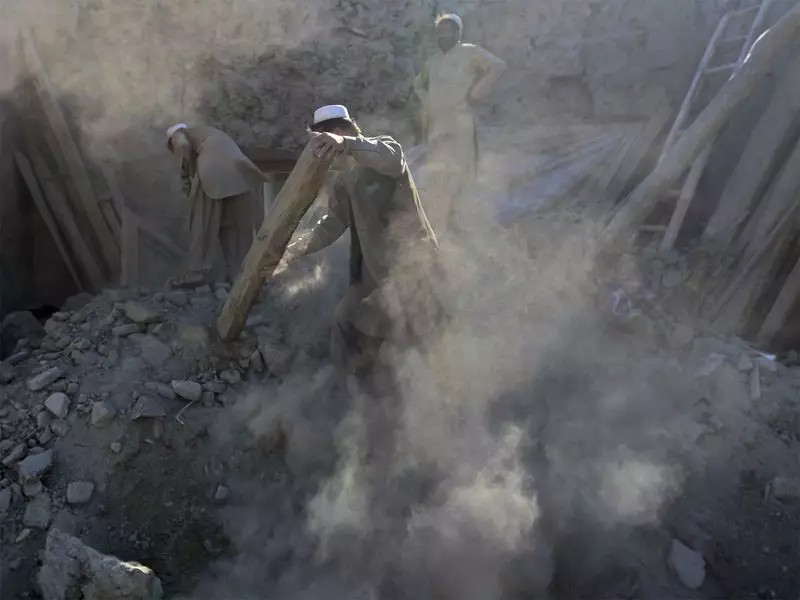
A significant seismic event rattled parts of Afghanistan on Saturday, as confirmed by official monitoring agencies. The earthquake, measuring a magnitude of 4.1 on the Richter scale, originated in the geologically active Hindu Kush region.
Details of the Seismic Event
The tremor occurred at a precise time, with the National Center for Seismology (NCS) recording it at 11:44 pm IST on Saturday, April 12th. The epicenter was located in Afghanistan, a country frequently experiencing seismic activity due to its complex tectonic setting. The quake was relatively shallow, with a depth of approximately 120 kilometers, which can influence how tremors are felt on the surface across wider areas.
Initial reports did not immediately detail damage to infrastructure or casualties. The region's rugged terrain and remote settlements often mean that the full impact of such events takes time to assess. Authorities and disaster response teams typically monitor the situation closely following any seismic activity of this scale.

Regional Context and Seismic History
The Hindu Kush mountain range, stretching between Afghanistan and Pakistan, is one of the most seismically active zones in the world. It lies at the confluence of the Eurasian and Indian tectonic plates, whose constant collision is the primary driver of frequent earthquakes in the region.
This 4.1 magnitude event is a reminder of the persistent geological instability. While considered a light to moderate quake, tremors from events in this region are sometimes felt in neighboring countries, including parts of northern India, depending on the depth and magnitude. The area has a history of much more powerful and devastating earthquakes, making constant monitoring crucial.
Monitoring and Response
The National Center for Seismology, India's nodal agency for earthquake monitoring, promptly reported the event's parameters. Their role involves tracking seismic activity across and around the Indian subcontinent, providing critical data that contributes to regional understanding and early warning systems.
For residents in seismically prone areas, experts consistently advise preparedness. Key recommendations include:
- Knowing safe spots within homes and buildings.
- Having an emergency plan and kit ready.
- Following official guidelines during and after a tremor.
As of now, the immediate aftermath of this specific quake appears to be limited, but it serves as a geological alert. Seismologists continue to analyze the data from this event to understand its characteristics better and its relation to the ongoing tectonic processes in the complex Hindu Kush region.