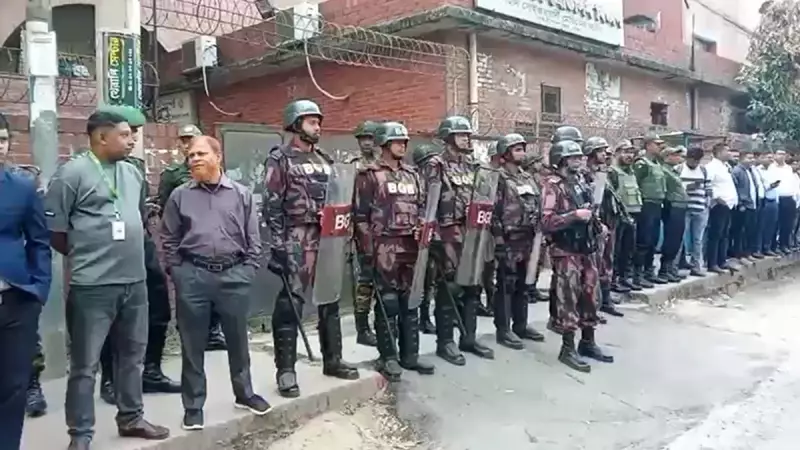
A massive crowd defied heavy security to gather in Dhaka on Saturday, December 20, 2025, for the funeral of Bangladesh Nationalist Party (BNP) leader and former MP, Sharif Osman Hadi. The somber event was held under a blanket of strict security measures as it became a flashpoint for political tensions, with mourners expressing anger towards the government of Prime Minister Sheikh Hasina.
Funeral Procession Draws Thousands Amid Political Unrest
The funeral prayers for Sharif Osman Hadi, a prominent figure within the opposition BNP, were held at the capital's Jurain Kabarstan. Despite the visible and intimidating presence of a large security contingent, a sea of people converged to pay their final respects. The sheer size of the gathering underscored Hadi's significant influence and the deep political divisions currently gripping the nation.
Hadi, who had been unwell for some time, passed away while receiving medical treatment in Singapore. His body was flown back to Bangladesh, arriving at Hazrat Shahjalal International Airport on Friday. From there, it was taken to the Combined Military Hospital (CMH) in Dhaka for necessary procedures before the final rites.

The atmosphere at the funeral was charged with emotion and political sentiment. Many attendees used the occasion to voice their strong opposition to the ruling Awami League government. Slogans criticizing Prime Minister Sheikh Hasina were reportedly heard, transforming the mourning ceremony into a potent symbol of political dissent.
Tight Security and Anti-Government Protests
Authorities, anticipating potential unrest, had deployed a formidable security apparatus around the funeral site and along the procession route. Law enforcement agencies were on high alert to prevent any outbreak of violence or large-scale protests from spiraling out of control.
However, the grief of the mourners seamlessly blended with political frustration. The crowd's chants and banners highlighted the ongoing crackdown on opposition activities in Bangladesh. For many supporters, Hadi's death represented not just the loss of a leader but also a moment to rally against what they perceive as an increasingly authoritarian regime.
The government's tight security grip was a direct response to fears that the funeral could ignite wider protests. The BNP and other opposition groups have long accused Sheikh Hasina's government of suppressing dissent, undermining democratic institutions, and persecuting political rivals through the judicial system.
Implications for Bangladesh's Political Landscape
The death of Sharif Osman Hadi and the massive, protest-laden response to his funeral have significant implications for Bangladesh's immediate political future. The event has vividly demonstrated the potent, simmering discontent among a large section of the populace.
Analysts suggest that such public displays of opposition sentiment, even in the face of stringent security, could galvanize the BNP and its allies. It may lead to renewed calls for movement and resistance against the current administration. The government, on the other hand, is likely to view the protests as a challenge to its authority, potentially leading to further tightening of controls.
The incident underscores the deep and possibly widening political rift in Bangladesh. With the next general elections on the horizon, the alignment of political forces and public sentiment will be crucial. The funeral of Sharif Osman Hadi has, perhaps unexpectedly, become a major rallying point and a barometer of the nation's tense political climate.
As Bangladesh navigates this period of heightened tension, the world watches closely. The coming days will reveal whether this event marks a momentary outburst of grief and anger or the beginning of a more sustained and organized political challenge to the ruling establishment.