

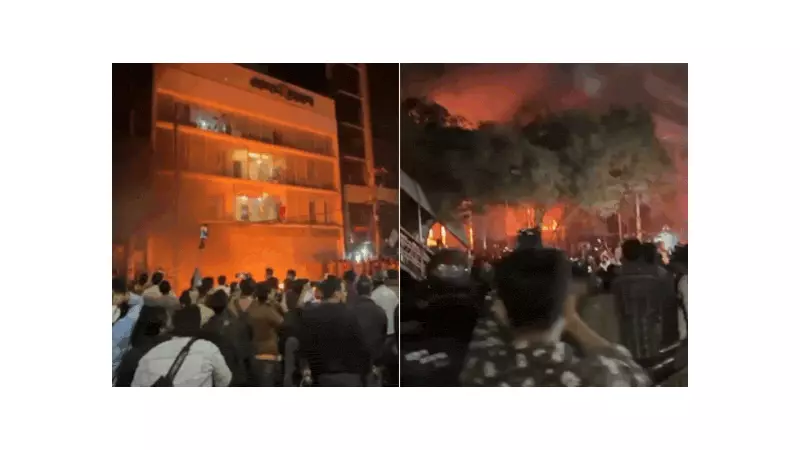
Bangladesh has been plunged into a fresh wave of violent unrest following the tragic death of a prominent youth leader, sparking widespread demonstrations that have seen newspaper offices set ablaze and fierce clashes with authorities.
Violence Erupts in Dhaka Streets
The catalyst for the turmoil was the passing of Sharif Osman Hadi, a key figure in the country's political landscape. Hadi, who was contesting the upcoming February 12 general elections, died on late Thursday at a hospital in Singapore. He had been on life support for six days after being shot in the head by masked assailants the previous Friday. The attack occurred while he was launching his election campaign in Dhaka's Bijoynagar area.
Following news of his death, emotionally charged protesters took to the streets. The demonstrations quickly turned destructive, with videos showing crowds vandalising and setting fire to the offices of two of the nation's leading newspapers: Daily Prothom Alo, the country's largest newspaper, and the Daily Star. Authorities reportedly struggled to bring the fires under control.

A Nation in Mourning and Anger
The protests were marked by intense emotion, with demonstrators chanting slogans invoking Hadi's name and vowing to continue their resistance. Their core demand is justice and accountability for the attack that ultimately claimed the young leader's life. In response to the national tragedy, Bangladesh's interim government chief, Muhammad Yunus, announced a day of state mourning on Saturday, as reported by Prothom Alo.
This incident has deepened existing fears about a significant deterioration in law and order within the country. The death of Hadi, a notable participant in the July Uprising, appears to have become a flashpoint for broader political frustrations.
Broader Political Tensions Surface
The unrest surrounding Hadi's death is not an isolated event. It comes amidst a backdrop of simmering political tensions. Just a day prior, on Wednesday, Dhaka witnessed fresh anti-India protests. Hundreds of demonstrators, marching under the banner of "July Oikya" (July Unity), moved toward the Indian High Commission. They raised anti-India slogans, calling for an end to what they described as "anti-Bangladesh conspiracies". The protesters also demanded the return of former prime minister Sheikh Hasina.
The convergence of these events—the violent protests over a political assassination and the organised anti-India demonstrations—paints a picture of a nation grappling with complex internal and external pressures. The coming days will be critical in determining whether the situation stabilises or descends further into chaos.






