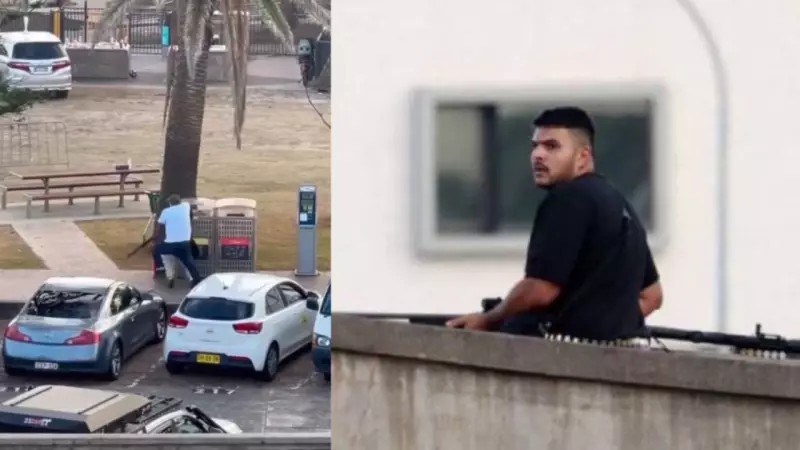
Australian authorities have officially declared the horrific mass shooting at a Hanukkah celebration on Sydney's Bondi Beach a terrorist attack, driven by Islamic State ideology. The assault, carried out by a father and son originally from Pakistan, resulted in the deaths of 15 individuals and left 25 others hospitalised, several in critical condition.
Investigation Reveals Islamic State Inspiration and Planning
Federal Police Commissioner Krissy Barrett stated on Tuesday that the investigation now conclusively points to an ideologically motivated act of terror. This assessment followed the recovery of material linked to the Islamic State group and improvised explosive devices. Prime Minister Anthony Albanese emphasised that the finding was based on concrete evidence seized during the probe, including flags and online content associated with the extremist organisation.
The suspects have been identified as Sajid Akram, 50, who was killed by police at the scene, and his son Naveed Akram, 24, who is under guard in a hospital. Authorities confirmed the pair deliberately targeted Jewish attendees, aiming for maximum casualties. Investigators discovered two homemade IS flags draped over a vehicle used in the attack.

Prior Intelligence, Gun Laws, and the Philippines Connection
It has emerged that the Australian Security Intelligence Organisation (ASIO) had previously investigated Naveed Akram in 2019 due to his associations with a Sydney-based network sympathetic to Islamic State. He and family members were interviewed but were not deemed an imminent threat at that time. Officials insist there was no intelligence failure, as neither individual was on an active terrorism watchlist before the attack.
The case has triggered a major review of gun laws. Sajid Akram legally owned six firearms under a licence for recreational hunting, several of which were brought to Bondi Beach. Prime Minister Albanese and state leaders have pledged the most significant tightening of Australia's firearm regulations since the 1996 Port Arthur massacre.
Investigators are also scrutinising a trip the duo took to the Philippines in November, just weeks before the attack. Philippine immigration records show Sajid Akram travelled on an Indian passport, while Naveed used an Australian passport, both listing Davao City in the south as their destination. Australian security sources, cited by ABC Australia, suggested the men might have undergone "military-style training" there, though Philippine authorities have not confirmed this. The region has historically seen activity by Islamist militant groups.
Victims, Heroes, and a Nation in Mourning
The victims of the attack, whose ages ranged from 10 to 87, included a British-born rabbi, a Holocaust survivor, a retired police officer, and a 10-year-old girl. The tragedy has plunged communities into deep mourning.
Amid the horror, stories of bravery emerged. Ahmed al Ahmed, a Syrian-born shop owner, was filmed tackling and disarming one of the gunmen before being shot multiple times. Prime Minister Albanese visited him in hospital, hailing him as "a true Australian hero." Bondi Beach lifeguards and police officers also rushed towards the gunfire to assist victims, with several officers sustaining injuries.
As the investigation continues, the nation grapples with the security implications and the profound loss from an attack designed to sow division during a festival of light.