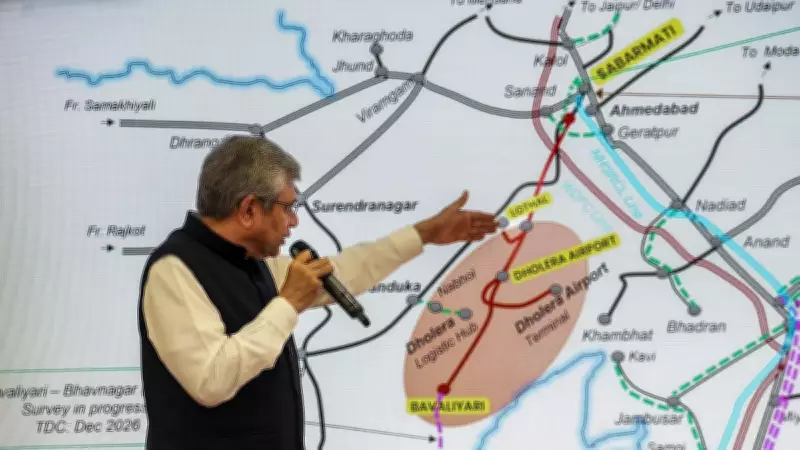
India's first semi-high-speed rail corridor, designed for speeds of up to 220 kmph, connecting Ahmedabad and Dholera in Gujarat, has received the approval of the Union Cabinet. The 134-kilometer-long railway line is expected to drastically reduce travel time between Sarkhej and Dholera to approximately 34 minutes, down from the current journey duration.
Key Details of the Project
The corridor, which will be built at an estimated cost of several thousand crore rupees, is a significant step towards modernizing India's railway infrastructure. It will be equipped with state-of-the-art signaling systems, advanced track technology, and modern rolling stock to ensure safe and efficient operations at high speeds.
Route and Connectivity
The line will originate from Sarkhej in Ahmedabad and terminate at Dholera, a rapidly developing industrial city. Dholera is part of the Delhi-Mumbai Industrial Corridor (DMIC) and is being developed as a smart city. The new rail link is expected to boost economic activities in the region, enhance connectivity, and promote tourism.

Benefits and Impact
The project is anticipated to generate thousands of jobs during construction and operation phases. It will also reduce road traffic congestion on the Ahmedabad-Dholera highway and provide a faster, more comfortable travel option for commuters. Additionally, the corridor will support the movement of goods, benefiting local industries.
Government Statements
Union Railway Minister Ashwini Vaishnaw stated that the project aligns with Prime Minister Narendra Modi's vision of a modern and efficient railway network. He emphasized that the semi-high-speed corridor will set new benchmarks for rail travel in India and pave the way for similar projects across the country.
The cabinet nod, received on May 13, 2026, marks a crucial milestone for the project. Detailed planning and land acquisition processes are expected to commence shortly, with construction likely to begin within the next fiscal year. The corridor is part of the government's broader strategy to upgrade railway infrastructure and introduce faster trains on key routes.