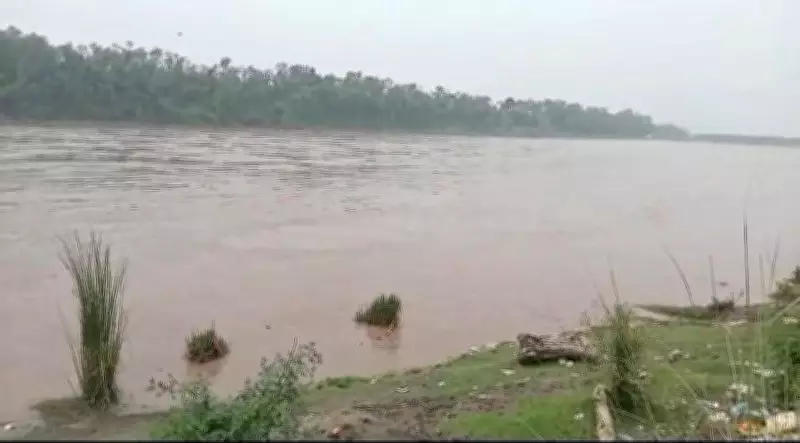
Heavy rainfall in the higher reaches of Jammu and Kashmir has led to the opening of sluice gates on two major dams along the Chenab river, causing water to flow freely into Pakistan. This development comes amid heightened tensions following the suspension of the Indus Waters Treaty (IWT) by India.
Dam Operations and Water Flow
The sluice gates of the Baglihar dam in Ramban and the Salal dam in Reasi were opened after their reservoirs experienced heavy inflows due to incessant rain. On Wednesday, water was clearly visible flowing into Pakistan at Akhnoor, the last point in Jammu district before the Chenab enters Pakistan. Local residents noted that the river has been flowing freely into Pakistan for an extended period.
Randhir Singh, a 35-year-old local resident who visited the riverbank, stated that while the water level is currently above normal, it had been completely stopped only once after the Pahalgam attack in April last year. "We have not seen the dried riverbed since that time when suddenly the water vanished from the river," he said.

Context of Indus Waters Treaty Suspension
The Indian government suspended the Indus Waters Treaty following a terrorist attack in Pahalgam on April 22 last year, which killed 26 civilians. The attack, blamed on Pakistan-backed terrorists, led to a brief military confrontation known as Operation Sindoor. In the aftermath, the gates of dams on the Chenab were shut, causing the river to dry up in Akhnoor.
Despite the suspension, the Chenab's natural flow has resumed due to the heavy rains. A local soldier from the Indian Army, who is currently posted in Arunachal Pradesh and spoke on condition of anonymity, recalled growing up near the Chenab. He said, "I have seen news reports that the government is taking measures to divert the Chenab water. These are welcome steps, but it may take a lot of time as this is one of the most turbulent rivers of the world." Many locals from the area serve in the Army and Border Security Force.
Pakistan's Stance
According to reports, the Pakistani military establishment recently stated that it would take "all necessary measures to secure its share under IWT." The treaty, signed in 1960, governs the sharing of water from the Indus River system between India and Pakistan. Its suspension by India has raised concerns about water security in the region.
A group of local youth gathered at the river remarked that it was not possible to stop the flow of the "mighty Chenab," which they said can overthrow any hurdle in its way. The natural flow of the river underscores the challenges in managing water resources in the region, especially during periods of heavy rainfall.