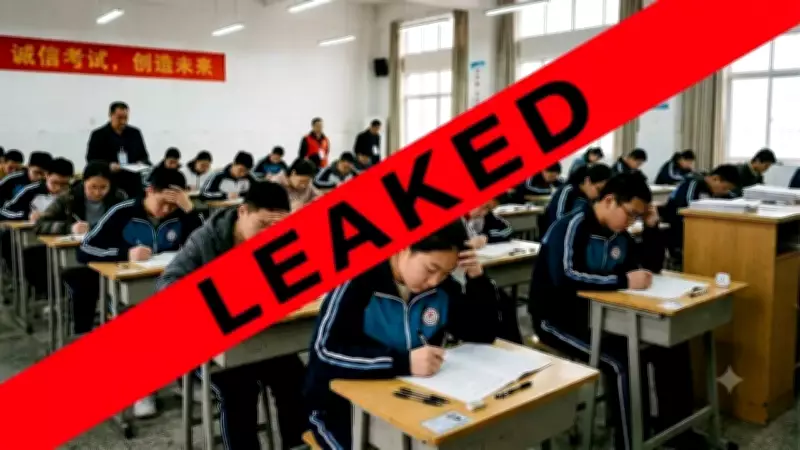
China's Embassy in India recently took a swipe at India's exam leak controversies while praising the conduct of China's biggest school examination. On June 10, Chinese Embassy spokesperson Yu Jing posted on social media about the successful completion of the 2026 Gaokao, China's national college entrance examination. "China's Gaokao - the world's largest exam & India's equivalent of JEE/NEET rolled into one - was conducted smoothly for 1.3 crore students in just 2 days." Yu credited the smooth conduct of the exam to nationwide coordination measures, including quieter roads and temporary pauses in activities around exam centres.
Past Cheating Incidents in China
While there have been no publicly confirmed large-scale leaks of Gaokao question papers in recent years, Chinese authorities have repeatedly dealt with cheating attempts and leak allegations. Given China's tightly controlled media environment, it is difficult to independently verify whether all incidents related to examination malpractice become public. In 2022, images of Gaokao mathematics papers circulated online, leading to speculation that the exam had been leaked. However, according to China's Ministry of Education, the incident involved students attempting to cheat during the examination rather than an actual paper leak. State-run newspaper Global Times reported that one candidate in Gansu province secretly brought a mobile phone into the examination hall and photographed the question paper to seek answers online. In another case, a student in Guangdong allegedly manipulated social media posts to make it appear that exam questions had been uploaded before the test began.
Other Exam Leaks in China
Although the Gaokao has largely remained protected from major leaks, other important examinations in China have not escaped controversy. According to a 2015 report by China Daily, authorities launched an investigation after questions and answers from the National Postgraduate Entrance Examination reportedly appeared online before the exam. Many students claimed that the leaked material matched actual questions in the English and politics papers. China's Ministry of Education referred the matter to police and promised strict action against anyone involved in cheating. The report noted that exam-related cheating scandals had surfaced periodically. It cited a 2012 case in which an education official in Hunan province stole postgraduate examination papers from a confidential storage room and sold them for profit. He was later sentenced to prison. According to The China Project, a mathematics instructor named Li Lin faced accusations in 2018 after many students claimed that a large number of questions he discussed in a preparatory video closely resembled those that later appeared in the postgraduate entrance examination. China's Ministry of Education investigated the matter and said it found no evidence of a leak. Li denied wrongdoing and argued that he had been teaching similar question patterns for years.

What is Gaokao?
The Gaokao, officially known as China's National Higher Education Entrance Examination, is widely regarded as the most important exam in a Chinese student's life. According to the South China Morning Post, performance in the exam largely determines whether students can enter university, which institutions they can attend and what subjects they can study. The modern Gaokao was introduced in 1952 and was reinstated in 1977 after being suspended during the Cultural Revolution. It is often compared to China's ancient imperial examination system, which for centuries served as a pathway for social mobility. The exam tests students in subjects such as Chinese, mathematics and English, along with science or humanities streams. In highly populated provinces, competition remains intense, with university seats far fewer than the number of candidates. For many Chinese families, success in the Gaokao is still viewed as a life-changing opportunity that can shape education, career prospects and social mobility for years to come, according to the South China Morning Post.