

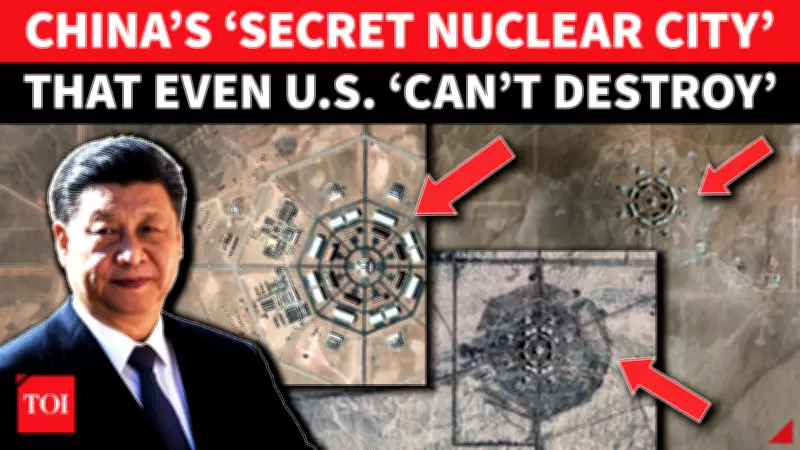
Satellite images analyzed by Reuters have revealed China's massive new nuclear infrastructure deep inside its northwestern desert, sparking fears of a major shift in global military power. Analysts say Beijing is building launch pads, bunkers, missile-defense systems, and secret command hubs designed to ensure China can survive any potential U.S. first strike and still retaliate. The giant network near the Hami missile silo field is being called one of China's most ambitious military projects ever.
Unprecedented Nuclear Expansion
The newly constructed facilities, located in the Gobi Desert, include multiple launch pads for intercontinental ballistic missiles (ICBMs), hardened bunkers for command and control, and advanced missile-defense systems. According to experts, the scale and sophistication of the infrastructure are unprecedented, suggesting a strategic shift towards a more survivable nuclear force.
Strategic Implications
As tensions over Taiwan and the Pacific rise, experts warn this nuclear expansion could dramatically reshape the balance between Washington and Beijing. The ability to withstand a first strike and retaliate effectively is a cornerstone of China's nuclear deterrence strategy. The new facilities are designed to ensure that even if a preemptive attack destroys some of China's missile silos, a significant number of missiles would survive and be launched in response.

Analysts note that the Hami region already hosts a large number of missile silos, and the new infrastructure adds layers of redundancy and protection. The inclusion of missile-defense systems indicates that China is also preparing to defend against potential U.S. strikes.
Global Reactions
The revelation has caused alarm in Washington, with defense officials calling for a reassessment of U.S. strategic posture. Some experts argue that the new Chinese capabilities could destabilize the nuclear balance and increase the risk of miscalculation in a crisis. Others point out that China's nuclear arsenal is still smaller than that of the U.S. and Russia, but the trend is clearly towards expansion.
Beijing has not officially commented on the satellite images, but Chinese officials have previously stated that China's nuclear policy is defensive and that it will not engage in an arms race. However, the scale of the new construction suggests otherwise.
Technical Details
The satellite images show:
- Multiple launch pads for ICBMs, each with support vehicles and equipment.
- Underground bunkers and tunnels for command and control.
- Missile-defense radar and interceptor sites.
- New roads and rail links connecting the facilities.
These elements are designed to make the nuclear forces more resilient and able to operate even under attack. The infrastructure is spread over a wide area, making it difficult for an adversary to neutralize all of it in a single strike.
Conclusion
The secret nuclear city in the Gobi Desert represents a major step in China's military modernization. As the world watches, the strategic implications for global security are profound. The United States and its allies will need to adapt to this new reality, potentially leading to a new arms race in the region.






