

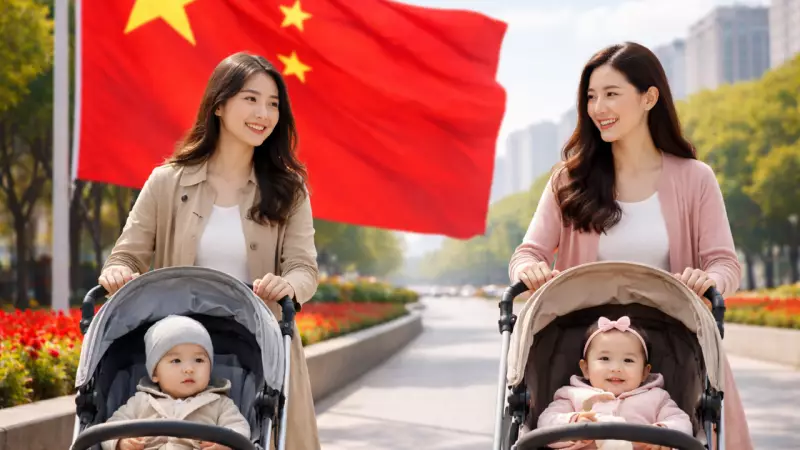
In a significant policy reversal aimed at tackling a deepening demographic crisis, China has ended a three-decade-long tax exemption on contraceptives. From January 1, 2025, condoms and birth control pills are now subject to a 13% value-added tax, aligning them with most standard consumer goods.
From Population Control to Pro-Natal Push
This move to tax contraceptives underscores the dramatic scale of Beijing's shift in population policy. For decades, under the infamous one-child policy introduced by Deng Xiaoping in the late 1970s, China aggressively curbed population growth. That policy, enforced through fines and stringent measures, was relaxed to allow two children in 2016 and three in 2021.
However, the anticipated baby boom never materialised. Births in 2024 plummeted to just 9.54 million, roughly half the number recorded in 2016. The population has now shrunk for three consecutive years, with nearly 310 million people aged 60 and above. Experts warn this decline threatens long-term economic stability, with leaders fearing China may "get old before it gets rich."

Subsidies and "Love Education": A Multi-Pronged Strategy
The contraceptive tax is just one part of a broader campaign to encourage childbirth. Authorities are promoting marriage and parenthood as national priorities. Colleges have been instructed to offer "love education" courses that portray family life in a positive light. Top leaders recently pledged to foster "positive marriage and childbearing attitudes" to stabilise population growth.
Simultaneously, the government has introduced financial incentives. Parents now receive an annual subsidy of 3,600 yuan (about $500) for each child under three born from January 1, 2025. Over three years, this amounts to 10,800 yuan per child. Childcare subsidies are also tax-exempt, and a free public preschool scheme has been launched.
High Costs and Public Skepticism
Despite these measures, many young Chinese remain sceptical. The state broadcaster CCTV frames the new subsidies as an effort to ease the burden of raising children. However, the reality of soaring costs is a major deterrent. A study by the YuWa Population Research Institute estimates the average cost of raising a child to age 18 in China is approximately 538,000 yuan, a figure that can exceed one million yuan in expensive cities like Shanghai.
The new 13% tax on contraceptives, therefore, symbolises a stark transition. It marks the definitive end of an era focused on limiting families and the beginning of a fraught struggle to convince a generation burdened by high living costs and urban pressures to have more children.






