China has issued a sharp warning to foreign media outlets, accusing them of disseminating what it calls "false information" in their reporting of a recent tragic fire in Hong Kong. The warning underscores the ongoing tensions between Beijing and international press over coverage of events in the semi-autonomous region.
The Incident: A Deadly Blaze in Kowloon
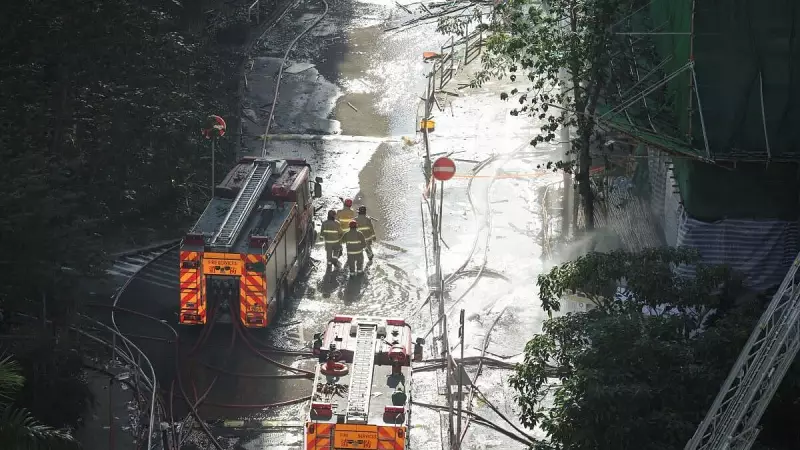
The controversy stems from a devastating fire that broke out on Wednesday, April 10, 2024, in a residential building located in the bustling Jordan area of Kowloon, Hong Kong. The blaze resulted in the tragic loss of five lives and left at least 35 people injured. Emergency services responded swiftly to the incident, which sent plumes of thick smoke into the sky and caused significant alarm in the densely populated neighborhood.
Initial reports from local authorities and fire services indicated the fire started on the building's lower floors. The cause of the fire is currently under investigation by Hong Kong's Fire Services Department. The building, like many in older districts of Hong Kong, housed a mix of residential units and commercial establishments, complicating rescue and firefighting efforts.

Beijing's Accusation and Stern Warning
The Chinese government's reaction focused not on the tragedy itself, but on how it was portrayed globally. During a regular press briefing on Thursday, April 11, Foreign Ministry spokesman Wang Wenbin launched a pointed critique against certain foreign media organizations.
Wang stated that some international outlets had exploited the incident to "smear and attack" China's national security policies in Hong Kong. He accused them of spreading false narratives and misleading the global public. While he did not name specific media companies or articles, the warning was broad and unequivocal.
"We urge relevant media to abide by professional ethics, report on Hong Kong affairs objectively and fairly, and stop spreading false information," Wang declared from the podium in Beijing. This statement represents a formal censure and places foreign correspondents covering Hong Kong on notice regarding their reporting tone and content.
Context and Implications for Press Freedom
This incident is not isolated. It occurs within a broader context of tightening controls over information and dissent in Hong Kong since the implementation of a sweeping national security law in 2020. The law, aimed at curtaining secession, subversion, terrorism, and collusion with foreign forces, has profoundly impacted the city's once-vibrant civil society and media landscape.
Several pro-democracy media outlets have been forced to close, and numerous journalists and publishers have faced legal action. The warning from the foreign ministry is seen by press freedom advocates as a further attempt to shape the narrative around events in Hong Kong and deter critical reporting.
The international community, including various press freedom organizations, has repeatedly expressed concern over the deteriorating environment for journalists in Hong Kong. They argue that such warnings from a powerful state apparatus can lead to self-censorship and hinder the ability of the press to perform its watchdog role, especially during crises.
The Hong Kong fire was a local tragedy with profound human cost. However, Beijing's response has shifted the focus to the geopolitical battleground of information and narrative control. It highlights the delicate and often fraught position of foreign media trying to report from within China's sphere of influence, where the lines between factual reporting and what the state deems as "false information" are increasingly blurred and politically charged.