China's Bohai Strait Undersea Rail Tunnel: A Global Engineering Landmark
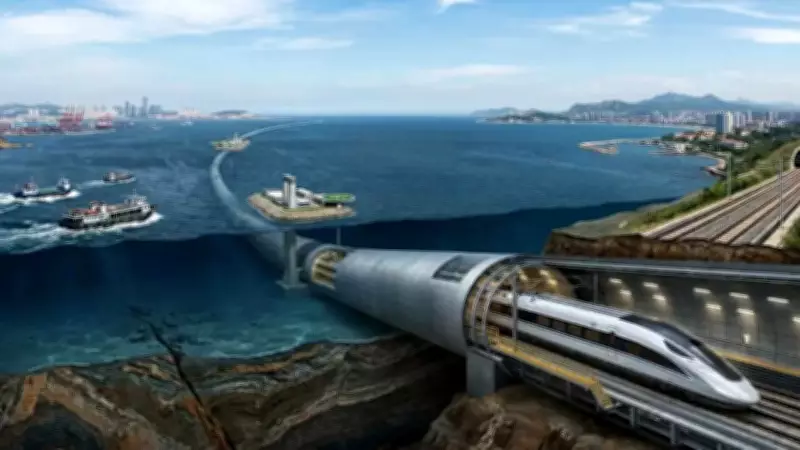
The Bohai Strait Cross-Sea Channel represents one of the most ambitious civil engineering projects in modern history. This groundbreaking undersea rail tunnel will connect the major port cities of Dalian and Yantai through a 120-kilometre-long passage constructed beneath the Bohai Sea, effectively linking the Liaodong and Shandong Peninsulas.
Revolutionizing Regional Transportation
Currently, travelers between Dalian and Yantai face two unappealing options: an eight-hour ferry journey or a logistically challenging 1,400-kilometre overland detour. The proposed high-speed rail connection aims to transform this arduous trip into a mere 40-minute journey, as detailed in Marefa studies. Trains will operate at speeds exceeding 250 kilometres per hour, establishing this fixed transit link as a catalyst for economic integration throughout the Bohai Rim region.
World's Longest Subsea Rail Connection
When completed, the Bohai Strait tunnel will become the longest subsea rail link globally, more than doubling the length of the Channel Tunnel between the United Kingdom and France. Feasibility reports indicate the project will span approximately 123–125 kilometres total, with roughly 90 kilometres positioned directly beneath the seabed.

The primary objective of this monumental undertaking is to fundamentally transform regional mobility logistics. Current ferry services suffer from weather-related delays and limited capacity. The new rail connection will provide an all-weather, high-frequency travel alternative capable of transporting both passengers and vehicles on specialized carriages.
Engineering Challenges and Solutions
Constructing this massive tunnel presents significant engineering hurdles, particularly regarding hydrostatic pressures and complex geological faulting. The Tan-Lu Fault in the Bohai Sea area ranks among East Asia's most active seismic zones. Research published in PMC (NCBI) reveals that the crust beneath the strait exhibits considerable lateral variability and extensive stratification.
To address these challenges, engineers will deploy high-performance Slurry Shield Tunnel Boring Machines (TBMs) designed to operate continuously at great depths under extreme conditions.
Strategic Economic Integration
According to ResearchGate publications, the Bohai Strait project serves as a crucial component of China's broader integration strategy for the Bohai Rim Economic Zone. As China implements its fifteenth five-year plan (2026-2030), increased emphasis has been placed on developing comprehensive 'eight vertical and eight horizontal' high-speed rail networks nationwide.
Economists predict that such extensive bridge and tunnel projects will significantly reduce Weighted Average Transport Costs (WATC) for economically disadvantaged counties in the northern Bohai Rim region. This enhanced accessibility will directly connect these areas to the industrial hubs of the Bohai Rim, fostering regional development and economic growth.
The Bohai Strait Cross-Sea Channel stands poised to establish new global standards for subsea infrastructure and high-speed logistics while dramatically improving transportation efficiency across one of China's most economically vital regions.