

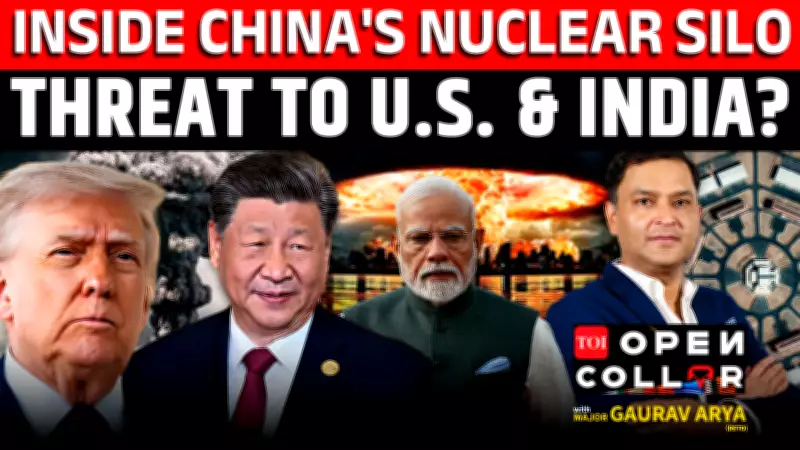
In this explosive episode of OPEN COLLAR, Major Gaurav Arya breaks down China's massive nuclear modernization program and the construction of new missile launch complexes in Xinjiang and Gansu. The episode explains China's pursuit of a stronger second-strike capability, its goal of reaching 1,000 nuclear warheads, the strategic significance of Bagram Air Base, and what India must do to counter the rapidly evolving nuclear and missile threat in the region.
China's Nuclear Ambitions
China is aggressively expanding its nuclear arsenal, with new missile silos and launch complexes being built in the western provinces of Xinjiang and Gansu. Analysts estimate that Beijing aims to possess approximately 1,000 nuclear warheads within the next decade, significantly altering the global strategic balance. This modernization includes advancements in delivery systems, such as hypersonic missiles and multiple independently targetable reentry vehicles (MIRVs).
Strategic Implications
The development of these new facilities enhances China's second-strike capability, ensuring that even after a first strike, China can retaliate effectively. The Bagram Air Base in Afghanistan, though currently under Taliban control, remains a point of strategic interest due to its proximity to China and potential for future use. India faces a growing threat as China's nuclear umbrella expands, potentially emboldening Beijing in border disputes and regional diplomacy.

India's Response
To counter these developments, India must accelerate its own nuclear modernization, including the development of the Agni-VI intercontinental ballistic missile and hypersonic weapons. Strengthening the triad of land, air, and sea-based nuclear forces is essential. Additionally, India should enhance missile defense systems and deepen strategic partnerships with like-minded nations, particularly the United States and France, to maintain deterrence.
Regional Dynamics
China's nuclear buildup also impacts other regional players, including Pakistan, which maintains its own nuclear arsenal. The balance of power in South Asia is shifting, and India cannot afford to fall behind. The episode concludes with a call for urgent policy decisions and increased defense spending to ensure India's security in the face of an increasingly assertive China.






