

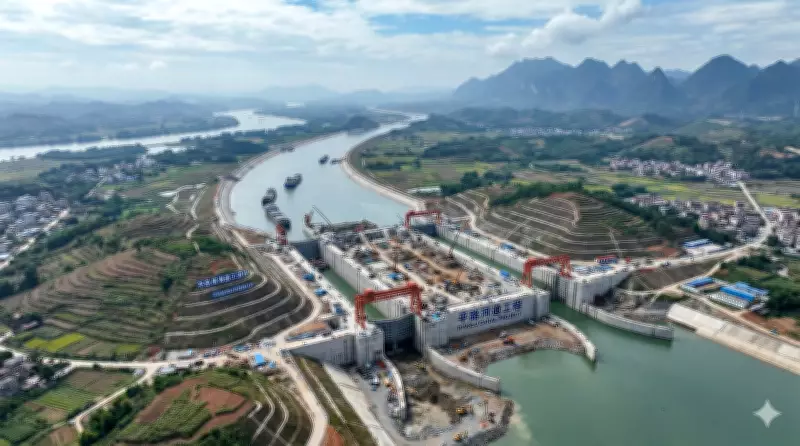
China's Ambitious Pinglu Canal: A 134-Kilometer Waterway Set to Transform Trade
China is currently advancing a monumental infrastructural initiative, involving the construction of an 83-mile (approximately 134-kilometer) canal designed to establish a direct link between the country's interior and the sea. This massive project, often compared to the Pinglu Canal, forms a crucial component of the Chinese government's long-term strategy to enhance domestic logistics and optimize international trade routes. The initiative has garnered significant attention from the global community, with experts closely monitoring its potential economic ramifications for the region in the coming years.
China Canal Project: Unveiling the 134-Kilometer Waterway
The canal in focus is associated with the Pinglu Canal, which is presently under development in southern China's Guangxi province. Upon completion, this waterway is projected to connect the Xijiang River with the Beibu Gulf, thereby creating a direct shipping route. According to officials from the Guangxi Zhuang Autonomous Region, as reported by China Daily, the canal will span approximately 134 kilometers, significantly boosting its capacity to accommodate large vessels along inland waterways. This endeavor aligns with China's broader agenda to modernize its transport infrastructure.
Why China's Massive Canal Holds Global Trade Significance
The importance of this canal lies in its potential to substantially reduce transportation costs and time. Currently, much of the region's waterborne cargo is exported via longer routes through Guangdong Province, a traditional gateway to global markets. The Pinglu Canal is expected to shorten this distance by about 561 kilometers, saving over 5.2 billion yuan annually in logistics expenses. This figure equates to roughly $750 million, based on an exchange rate of approximately 6.9 yuan to the dollar.

Research published in the Taylor and Francis Journal underscores that inland water transport plays a vital role in lowering logistics costs, particularly in developing nations. By providing a shorter and more efficient route, the canal could:
- Decrease shipping costs for exporters
- Foster regional economic growth
- Enhance China's competitiveness in the international marketplace
Engineering Scale and Environmental Considerations
Building a 134-kilometer canal is no small feat, demanding advanced engineering expertise to manage its scale, water flow, and cargo accommodation without disrupting aquatic systems. The Food and Agriculture Organisation (FAO) emphasizes that large canal systems necessitate meticulous planning to address economic and environmental impacts, especially concerning water usage and ecological balance.
Environmental experts have raised concerns regarding the canal, including:
- Potential alterations to local ecosystems
- Effects of water diversion
- Long-term sustainability challenges
China asserts that it is employing modern engineering techniques to minimize ecosystem disruption.
Strategic Importance of China's Inland-to-Sea Canal
Beyond economic benefits, the canal holds strategic value by improving China's internal supply chain, which currently depends on congested coastal routes. It also supports broader development objectives, such as regional advancement and infrastructure enhancement. The canal could serve as a connectivity tool within larger economic frameworks, potentially boosting the competitiveness of China's inland areas in the global market. Additionally, its proximity to Southeast Asia adds geopolitical significance.
A Project Under Global Scrutiny
It is not merely the canal's size that has captured worldwide interest, but its potential transformative impact. If successful, it may serve as a model for other nations seeking to enhance connectivity. However, environmental sustainability remains a pressing question. As construction progresses, the international community will continue to observe closely, recognizing that this canal represents not just an infrastructural feat, but a potential future for global trade dynamics.






