A moment of hesitation grips you at the entrance—a rectangular hole barely 40 cm by 30 cm dug into the earth. The guide's warning echoes: "Enter ONLY if you have strong lungs and are 100% sure about your physical fitness." Throwing caution to the wind, you take the plunge, descending a steep, clay staircase into absolute darkness, even in the middle of a sunny afternoon.
The Claustrophobic Descent into History
Each step downwards severs the connection to the world above, ushering you into a silent, labyrinthine world. The path is illuminated only by the flickering flames of indigenous lamps placed in crevices. The winding staircase forces sharp turns, demanding you twist your body to avoid banging your shoulders against the narrow walls. At times, the ceiling is just inches above your head, threatening a skull fracture, while the fear of a perilous slip questions the wisdom of ignoring the guide's stark warning.
The descent to level ground—a small assembly hall with another steep exit staircase—takes merely 2-3 minutes. Yet, in that brief time, the near-zero ventilation, oppressive heat, and stale air induce panting and fatigue. Climbing back up, desperate for terra firma, leaves you breathless and shaky. If five minutes in this environment can be so petrifying, how did guerrillas survive here for years, deprived of sunlight and clean air? "Welcome to the Cu Chi Tunnels," you realize, finally grasping the nightmare that confronted American soldiers.

A Network Forged by Grit and Necessity
The tunnels are a defining symbol of asymmetric warfare, where ingenuity and terrain knowledge trumped conventional military might. Their origins date to the late 1940s during the struggle against French colonial rule, when villagers dug small passageways for covert movement and supply storage. The network expanded dramatically during the Vietnam War, particularly from the early 1960s onward.
At their peak, this extraordinary underground survival zone stretched over 250 km. Dug primarily by hand using hoes, shovels, and baskets, the tunnels leveraged Cu Chi's laterite-rich soil, which hardened when exposed to air, creating bomb-resistant structures. Inside, the Viet Cong built a fully functional world with meeting rooms, makeshift hospitals, kitchens, armouries, and sleeping quarters.
Typically just 0.8 to 1 metre in height, the tunnels were hot, dark, suffocating, and infested with insects and snakes. For the guerrillas, they offered unmatched protection and mobility. For the US troops, they represented a frustrating, invisible enemy. The Viet Cong could launch surprise attacks and vanish into concealed trapdoors, often re-emerging kilometres away. Despite heavy bombardment, including B-52 strikes, the multi-layered, maze-like network proved incredibly resilient.
From Battlefield to Living Museum
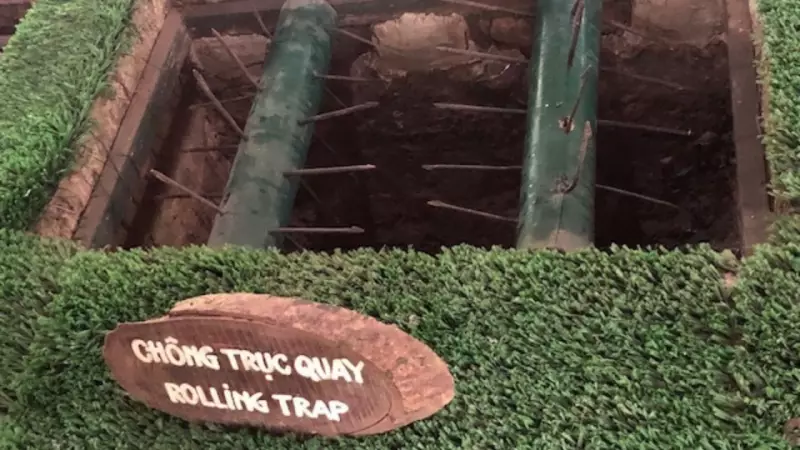
Fifty years after the war, time seems to stand still at the Cu Chi Tunnels, located about an hour's drive from Ho Chi Minh City beneath rubber plantations. Transformed into a major tourism site, they now offer visitors an immersive experience. Tourists can crawl through slightly widened sections, see reconstructed trapdoors, and even try firing an AK-47 at an on-site range under supervision.
The guide's words, "The days belonged to them [US troops]; but the nights belonged to us," now resonate with profound meaning. More than a tourist attraction, the tunnels stand as a raw, earthy testament to human resolve. They are a powerful, experiential reminder of how a determined force, intimately familiar with its home ground, can challenge a disproportionately superior adversary. As former US President Richard Nixon said in 1969, the Vietnam War is often misunderstood. But for any visitor who steps into Cu Chi's depths, the physical evidence of that struggle is unmistakably, and breathlessly, clear.