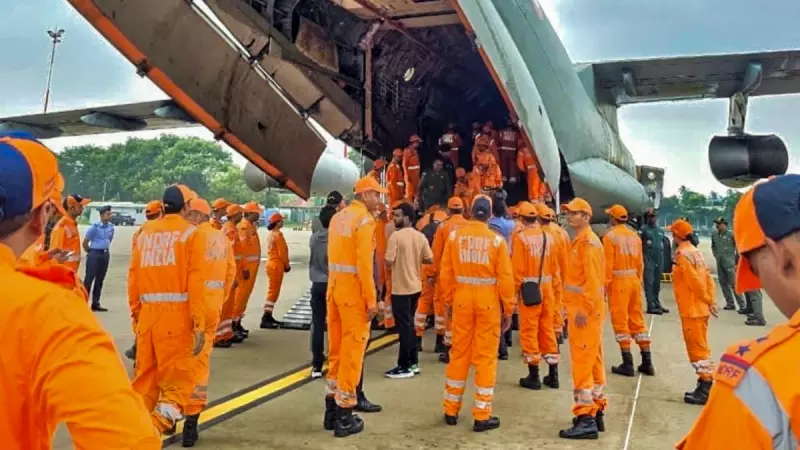
The island nation of Sri Lanka faces an unprecedented humanitarian crisis after Cyclone Ditwah unleashed catastrophic flooding and landslides, claiming more than 330 lives and displacing thousands. The devastating storm, which made landfall earlier this week, has left a trail of destruction across multiple regions, submerging entire villages and crippling infrastructure.
India Launches Swift Rescue Mission
In a swift response to the disaster, India initiated Operation Neer to evacuate its citizens stranded in the flood-ravaged areas. Indian authorities have confirmed the successful rescue of numerous nationals, demonstrating the country's commitment to the safety and security of its people abroad during times of crisis.
The rescue operations, coordinated by the Indian High Commission in Colombo, faced significant challenges due to persistent heavy rainfall and widespread flooding that hampered access to many affected areas. Despite these obstacles, Indian teams worked tirelessly alongside Sri Lankan authorities to locate and evacuate Indian citizens to safety.

Widespread Destruction and Response Efforts
The cyclone's impact has been particularly severe in coastal and low-lying regions, where torrential rains and powerful winds caused rivers to overflow and triggered massive landslides. Emergency services in Sri Lanka are operating at maximum capacity, with rescue teams battling difficult conditions to reach isolated communities.
Local authorities report that the death toll continues to rise as rescue workers gain access to previously inaccessible areas. The Sri Lankan government has declared a state of emergency in the worst-hit districts and has appealed for international assistance to cope with the scale of the disaster.
Critical infrastructure, including roads, bridges, and power supply networks, has suffered extensive damage, complicating relief efforts and leaving many communities without essential services. Hospitals in affected regions are overwhelmed with casualties, while temporary shelters are struggling to accommodate the growing number of displaced families.
Regional Cooperation and Future Implications
The disaster has highlighted the importance of regional cooperation in disaster management, with India's prompt rescue operation serving as a testament to the strong bilateral relations between the two neighboring countries. Meteorological departments across South Asia are analyzing the unusual intensity and behavior of Cyclone Ditwah, raising concerns about changing weather patterns in the region.
Environmental experts suggest that the severity of this cyclone aligns with warnings about increasing frequency and intensity of extreme weather events linked to climate change. The disaster serves as a stark reminder of the vulnerability of coastal nations to such natural calamities and the urgent need for enhanced disaster preparedness mechanisms.
As relief operations continue, international aid agencies are mobilizing resources to support Sri Lanka's recovery efforts. The full extent of the damage is still being assessed, but early estimates indicate that the economic impact will be substantial, affecting agriculture, tourism, and local livelihoods for months to come.