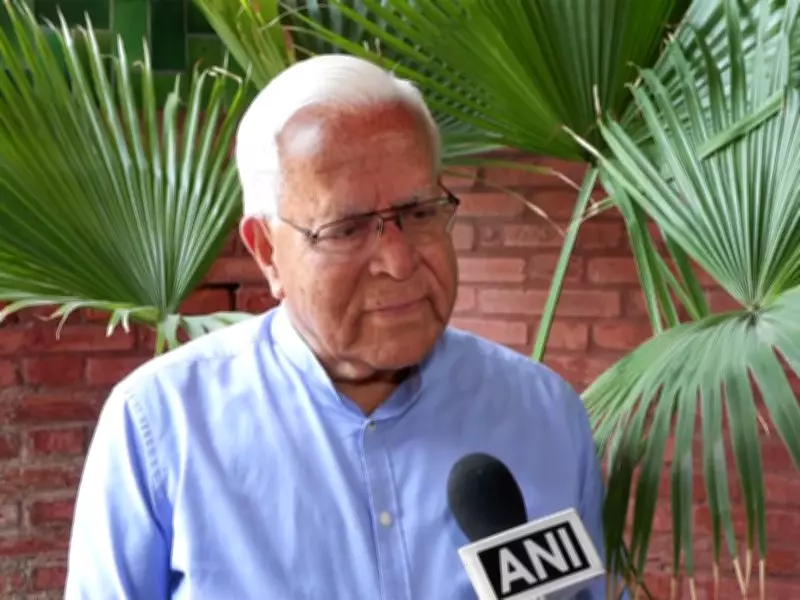
Former diplomat Ashok Sajjanhar has described the recent Quad foreign ministers' meeting in Delhi as yielding very positive outcomes, while underscoring India's significant role in the Indian Ocean region. The meeting, which brought together foreign ministers from the Quad nations—India, the United States, Japan, and Australia—focused on enhancing cooperation in the Indo-Pacific region.
Positive Outcomes Highlighted
Sajjanhar noted that the discussions were productive and led to concrete agreements on issues such as maritime security, infrastructure development, and climate change. He emphasized that the Quad is not a military alliance but a grouping of like-minded democracies committed to a free and open Indo-Pacific.
India's Strategic Importance
The former diplomat stressed that India occupies an important place in the Indian Ocean region, given its geographical location and growing economic and military capabilities. India's role as a net security provider in the region was acknowledged, with the Quad partners expressing support for India's leadership in initiatives such as the Indo-Pacific Oceans Initiative.

- Maritime security cooperation was a key focus, with plans for joint exercises and information sharing.
- Infrastructure projects under the Quad's infrastructure coordination mechanism were discussed, aiming to provide transparent and sustainable alternatives.
- Climate change and clean energy partnerships were also on the agenda, with commitments to accelerate the transition to renewable energy sources.
The meeting reaffirmed the Quad's commitment to upholding international law, including freedom of navigation and overflight, in the South China Sea and the broader Indo-Pacific. Sajjanhar pointed out that the Quad's growing cooperation is a positive development for regional stability.
Implications for Regional Dynamics
The Delhi meeting comes at a time of heightened geopolitical tensions, particularly with China's assertive actions in the region. Sajjanhar argued that the Quad provides a platform for like-minded nations to coordinate their responses without escalating conflicts. He noted that the group's focus on practical cooperation rather than confrontation is a key strength.
India's role in the Quad is seen as crucial, given its historical ties with the region and its ability to bridge interests between the other members and Southeast Asian nations. The former diplomat expressed optimism that the outcomes of the meeting would translate into tangible benefits for the region, including enhanced connectivity and economic resilience.
In conclusion, Sajjanhar highlighted that the Delhi Quad foreign ministers' meeting has set a positive trajectory for future cooperation, with India playing a central role in shaping the agenda for a stable and prosperous Indo-Pacific.