

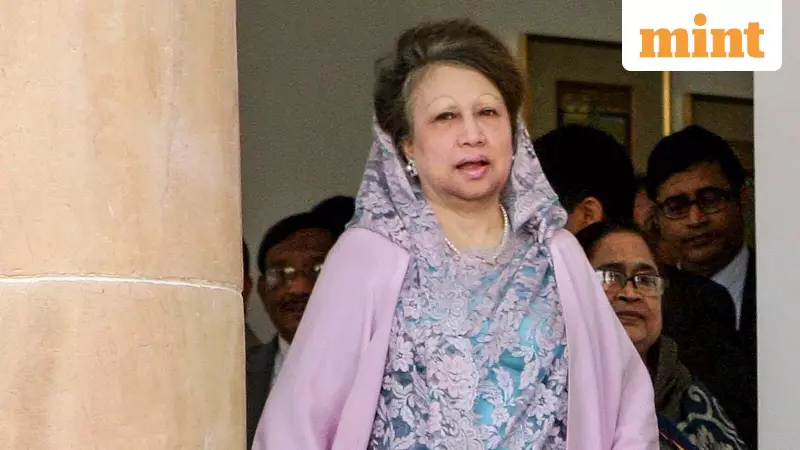
The political landscape of Bangladesh is under intense focus as former Prime Minister and Bangladesh Nationalist Party (BNP) chairperson, Khaleda Zia, remains in an "extremely critical" condition. The 80-year-old leader's health crisis unfolds against a backdrop of rising communal tensions and significant political developments, drawing close attention from neighbouring India.
A Critical Health Battle in Dhaka's Evercare Hospital
Khaleda Zia has been undergoing treatment at the Evercare Hospital in Dhaka since November 23 for multiple health complications. Her situation took a severe turn on December 11, when doctors placed her on ventilator support to provide rest for her lungs and other vital organs. In a late-night briefing held outside the hospital on Saturday, her personal physician, Dr. AZM Zahid, delivered a grave update.
"It cannot be said that her condition has improved. She is passing through an extremely critical phase," Dr. Zahid stated, urging the nation to pray for her recovery. He added a note of cautious hope, saying, "If, by Allah’s mercy, she can get through this critical period, we may hear something positive."

Her medical team includes both local and foreign physicians, with her daughter-in-law, Dr. Zubaida Rahman, actively involved. While the BNP has historically sought permission for her to receive advanced medical care abroad, her current physical state is deemed too fragile for air travel, forcing the continuation of treatment within Bangladesh.
Political Ramifications and a Key Return
The health of the former prime minister is inextricably linked to Bangladesh's volatile politics. Her son, Tarique Rahman, who serves as the BNP's acting chairperson, visited her at the hospital for over two hours, leaving just before midnight. His presence in the country itself marks a major political shift.
Following the ousting of Prime Minister Sheikh Hasina last year, Rahman, through legal battles, was acquitted in cases filed during the Awami League's tenure. These acquittals have paved the way for his return, significantly altering the dynamics within the opposition BNP as the country moves towards the next general elections scheduled for February 2026.
Communal Incidents and India's Stance on Stability
Amidst this political uncertainty, Bangladesh has witnessed a spate of unsettling incidents. In the early hours of Saturday, a mob vandalised the shrine of a Sufi saint in northwestern Thakurgaon. A day prior, on Friday, a powerful explosion damaged an Islamic seminary on the outskirts of Dhaka in the Keraniganj area, injuring four people. Police recovered bomb-making materials from the scene.
These events occur as India has reiterated its position on its neighbour's internal affairs. On Friday, the Ministry of External Affairs (MEA) spokesperson, Randhir Jaiswal, emphasised India's consistent support for democratic processes in Bangladesh.
"India stands for strengthening our ties with the people of Bangladesh. We favour peace and stability in Bangladesh and have consistently called for free, fair, inclusive and participatory elections in Bangladesh," Jaiswal outlined. This statement underscores the international scrutiny on Bangladesh's political and social environment ahead of the pivotal 2026 polls.
The confluence of a critical health situation for a major opposition leader, the return of a key political figure, rising communal tensions, and clear diplomatic messaging from a powerful neighbour sets the stage for a complex and crucial period in Bangladesh's history.






