

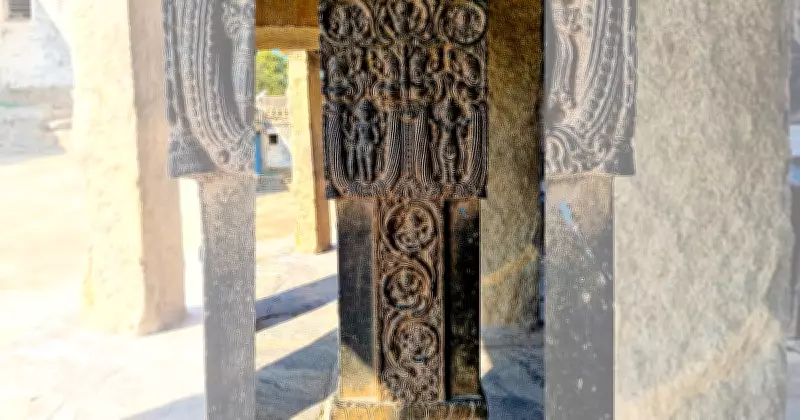
Hemavathi is not alone in its obscurity; other lesser-known capitals near Bengaluru, such as Manne and Penukonda, share a similar fate. These sites, once flourishing centers of power and culture, now lie largely forgotten, their stories waiting to be rediscovered.
The Ruins of Hemavathi
Hemavathi, located in the Anantapur district of Andhra Pradesh, was the capital of the Western Chalukyas. The Doddeswara Temple, with its finely carved perforated stone windows, stands as a testament to the architectural brilliance of the era. The temple's intricate carvings and sculptures reflect the artistic achievements of the Chalukya dynasty, which ruled much of the Deccan between the 6th and 12th centuries.
Manne: A Capital of the Hoysalas
Manne, situated near Bengaluru, served as a capital of the Hoysala Empire. The Kapileshwara Temple and Sri Vijaya Jinalaya are among the surviving structures that highlight the Hoysala style of architecture, known for its detailed star-shaped platforms and ornate pillars. Manne's historical significance is often overshadowed by more prominent Hoysala sites like Belur and Halebidu.

Penukonda: The Vijayanagara Stronghold
Penukonda, also in Anantapur district, was a secondary capital of the Vijayanagara Empire after the fall of Hampi. The Gagan Mahal, a grand palace structure, and other fortifications reflect the military and administrative importance of this site. Penukonda's strategic location made it a key defensive post during the empire's later years.
These forgotten capitals offer a glimpse into the rich political and cultural history of the Deccan. Despite their neglect, they remain invaluable for understanding the region's past. Efforts to preserve and promote these sites could help revive interest in Karnataka's lesser-known heritage.






