

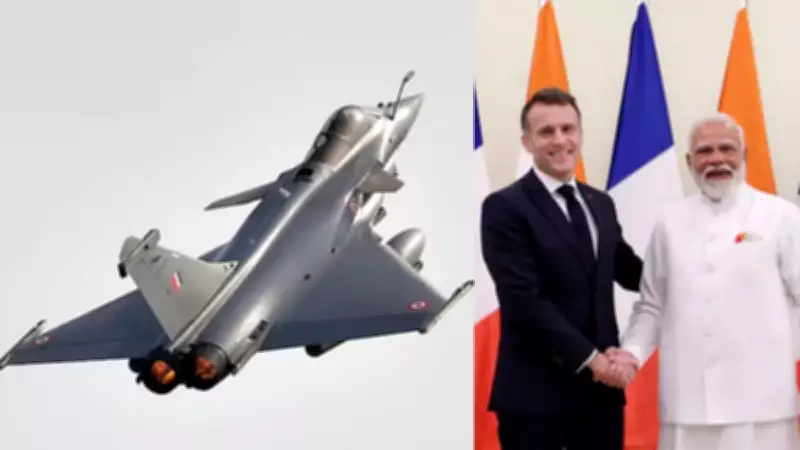
France has signaled a major boost to India's Make in India initiative by offering technology transfer and weapon integration for 114 Rafale fighter jets ahead of Prime Minister Narendra Modi's visit to Paris. The development marks a significant step in deepening defence ties between the two nations.
Key Highlights of the Rafale Deal
The proposed deal includes the transfer of critical technologies, allowing India to manufacture components locally and integrate indigenous weapons onto the Rafale aircraft. This aligns with India's push for self-reliance in defence production under the Atmanirbhar Bharat policy.
Weapon Integration and Indigenous Systems
France has agreed to integrate Indian-made weapons, including the Astra beyond-visual-range air-to-air missile and the Rudram anti-radiation missile, onto the Rafale jets. This will enhance the operational capabilities of the Indian Air Force while supporting domestic defence manufacturing.

Technology Transfer for Local Production
The technology transfer covers areas such as avionics, radar systems, and engine components. French defence major Dassault Aviation will collaborate with Indian firms, including Hindustan Aeronautics Limited (HAL) and private sector companies, to establish production lines in India.
Strategic Significance
The Rafale deal is seen as a cornerstone of India-France strategic partnership. It follows the earlier acquisition of 36 Rafale jets in 2016, which have already been inducted into the Indian Air Force. The new procurement of 114 aircraft is expected to significantly bolster India's air combat capabilities.
Boosting Make in India
This agreement is a major win for the Make in India initiative, as it involves substantial local manufacturing and technology transfer. It is expected to create thousands of jobs and enhance India's aerospace ecosystem.
Strengthening Defence Ties
Prime Minister Modi's upcoming visit to France will further cement bilateral defence cooperation. The two countries are also expected to discuss joint development of future technologies and increased maritime security collaboration in the Indo-Pacific region.
Next Steps
Negotiations on the final contract are expected to be concluded later this year, with deliveries likely to begin within five years. The deal will also include comprehensive maintenance and support packages.






