

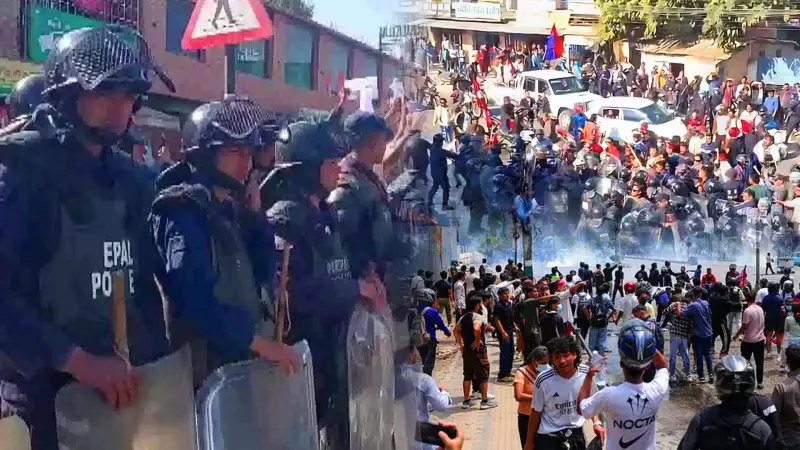
Fresh Violence Rocks Dhangadhi as Political Tensions Escalate
The city of Dhangadhi in Nepal witnessed renewed political violence on November 27, 2025, as cadres of the KP Sharma Oli-led CPN-UML party clashed with Gen-Z youth activists. This marks the second such confrontation within a week, highlighting growing political tensions in the region.
Details of the Confrontation
The protest was organized near Gen Z Road in anticipation of UML leader Mahesh Basnet's scheduled visit to the area. According to eyewitness accounts, the situation turned violent when party cadres arrived on motorbikes and charged directly at the demonstrators. The confrontation resulted in one protester sustaining minor injuries, though the exact nature of their injuries wasn't immediately disclosed.
Local authorities had anticipated potential trouble following similar incidents in recent days. Police forces had been strategically deployed and security measures strengthened throughout Dhangadhi to prevent exactly this type of escalation. Despite these precautions, the rapid movement of motorcycle-riding party cadres made containment challenging.

Pattern of Escalating Tensions
This incident represents part of a broader pattern of political violence that has been spreading across Nepal. Just last week, a similar confrontation occurred between the same groups in Dhangadhi. The tension isn't isolated to this city alone.
In Bara district, another violent incident had previously occurred, while Simara witnessed particularly severe clashes that left six Gen-Z youth injured. The Simara confrontation had significant public impact, resulting in blocked highways, dismantled party flags, and even the temporary suspension of flights at Simara Airport.
The political targeting has extended to individual leaders as well. Mahesh Basnet himself faced an ink attack on his vehicle at Biratnagar Airport, indicating that the discontent isn't limited to street-level protests but includes direct actions against party leadership.
Ongoing Security Measures and Monitoring
Authorities have maintained close surveillance on both protest groups and UML-affiliated youth organizations in an effort to prevent further escalation. The police presence has been particularly noticeable around political mobilization events throughout the city.
Security forces are walking a delicate line, attempting to maintain order while allowing legitimate political activities to proceed. The repeated nature of these clashes suggests that underlying political tensions remain unresolved and could potentially flare up again during future political events.
As Nepal continues to navigate its complex political landscape, incidents like the Dhangadhi clashes serve as reminders of the challenges in balancing political expression with public safety. Both protesters and political parties appear to be testing boundaries, while security forces work to establish where those boundaries lie.






