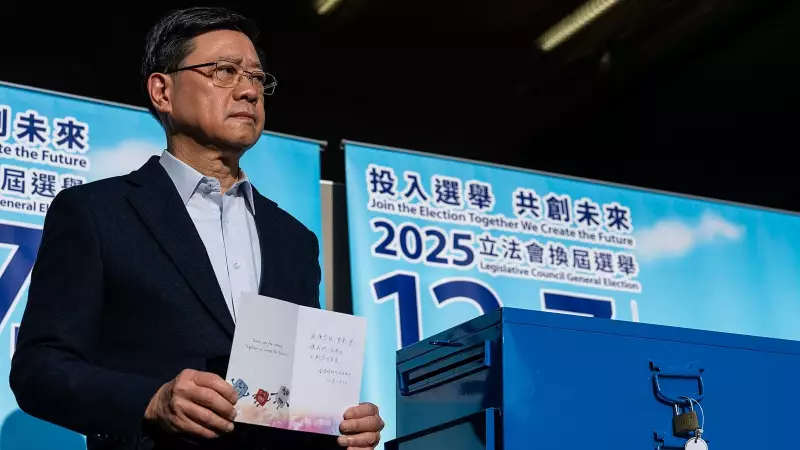
Hong Kong proceeded with a significant legislative election on Sunday, December 10, an event closely watched both locally and internationally. The polling for the District Council election took place under a somber cloud, following a devastating fire just days earlier that resulted in a tragic loss of life.
A City Votes Under a Shadow of Grief
The electoral process unfolded across Hong Kong, with polling stations open from 8:30 AM to 10:30 PM. However, the campaign period and the vote itself were markedly subdued. This was largely due to a catastrophic incident on Wednesday, December 6, when a fierce fire engulfed a building in the bustling Kowloon district. The blaze, which ripped through New Lucky House on Portland Street, claimed 39 lives and injured dozens more, marking it as one of the deadliest fires in the city in recent decades.
In a gesture of respect for the victims, the Hong Kong government suspended all election-related promotional activities following the tragedy. Chief Executive John Lee announced that the official election rally was canceled, and he along with other senior officials visited the fire scene. The government's focus visibly shifted to managing the aftermath of the disaster, even as the electoral machinery continued to operate.

The Revamped Electoral Landscape
This District Council election is the first to be held under a substantially overhauled system introduced in 2023. The reforms, spearheaded by the administration, have dramatically altered the political landscape. The key change involves a significant reduction in directly elected seats. Previously, 452 out of 479 district councilors were chosen by popular vote. Under the new framework, only 88 out of 470 seats will be filled through direct elections.
The remainder of the seats will be appointed by the Chief Executive or selected by government-appointed committees, effectively ensuring a much higher degree of administrative control over the councils. Pro-government figures have championed these changes as necessary to eliminate "chaos" and ensure that district councils focus solely on local community issues, aligning with the broader principle of "patriots administering Hong Kong." Critics and some opposition voices, however, argue that the reforms severely curtail democratic representation and public oversight.
Voter turnout became a point of keen observation. By 5:30 PM local time, the cumulative turnout rate stood at 24.53%, a figure that was lower than the 30.2% recorded at the same time during the last District Council election in 2019. The final turnout figures were awaited as polls closed.
Election Day Dynamics and Broader Implications
On the ground, the atmosphere was described as calm and orderly. Voters lined up at stations, with the shadow of the Kowloon fire palpable. The government had emphasized that the election was crucial for good governance at the district level, impacting everyday services and community welfare. Security was tight, as is standard for major events in Hong Kong, with police deployed to ensure a smooth process.
The election is seen as a critical test for the new electoral model. Its outcome will determine the composition of district councils, which are responsible for local affairs such as public hygiene, community activities, and minor infrastructure. More broadly, it is viewed as a consolidation of the political restructuring that has taken place in Hong Kong since the implementation of the National Security Law in 2020 and the electoral overhaul in 2021 for the Legislative Council (Legco).
The concurrent tragedy of the fire added a layer of complexity, reminding residents of urgent local issues like building safety and emergency preparedness in older urban districts. It also posed a challenge for the administration to balance its electoral responsibilities with its crisis response duties. The government's handling of both the fire's aftermath and the election is likely to be scrutinized in the days to come.

As Hong Kong counts the votes, the world watches a city navigating a pivotal moment. The election results will shape local governance for the next term, while the community continues to mourn and recover from an unimaginable loss. The events of this week underscore the multifaceted challenges facing Hong Kong as it moves forward under its new political paradigm.