

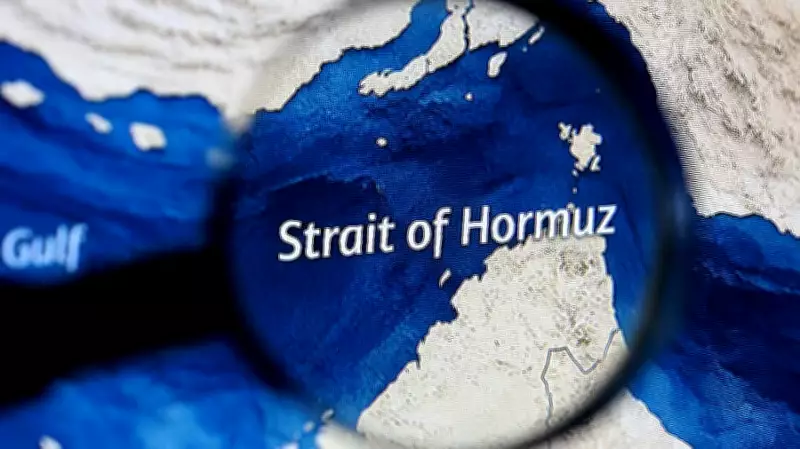
A new report has highlighted China's strategic vulnerability in the Indian Ocean, particularly regarding the Strait of Hormuz. Released ahead of the three-day Shangri-La Dialogue security summit that opened in Singapore on Friday, the report states that the Indian Ocean Region is re-emerging as a key strategic theatre after decades of relative calm following the end of the Cold War.
Strategic Implications
The report underscores how the Strait of Hormuz, a narrow waterway linking the Persian Gulf to the Indian Ocean, serves as a critical chokepoint for global energy supplies. For China, which relies heavily on oil imports from the Middle East, any disruption in this region could have severe economic consequences. The document argues that China's growing dependence on sea lanes of communication (SLOCs) through the Indian Ocean makes it increasingly vulnerable to geopolitical tensions and potential blockades.
Re-emergence of the Indian Ocean as a Strategic Theatre
According to the report, the Indian Ocean Region has regained prominence in global security discussions after decades of relative stability. The end of the Cold War had led to a period of reduced military focus in the region, but recent developments—including China's naval expansion, infrastructure investments, and territorial disputes—have brought it back into the spotlight. The report notes that the Indian Ocean now hosts a complex interplay of interests among major powers, including the United States, India, Japan, and Australia, alongside China.

China's Energy Security Concerns
China imports approximately 80% of its crude oil from the Middle East and Africa, with most shipments passing through the Indian Ocean and the Strait of Hormuz. The report warns that any instability in the Persian Gulf or the Indian Ocean could threaten China's energy security, forcing Beijing to diversify its supply routes or increase its naval presence. It also highlights China's efforts to develop alternative overland routes, such as the China-Pakistan Economic Corridor (CPEC), to reduce reliance on maritime chokepoints.
Shangri-La Dialogue Context
The report's release coincides with the Shangri-La Dialogue, an annual security summit attended by defense ministers, military officials, and experts from across the Asia-Pacific region. The forum provides a platform for discussing pressing security issues, including maritime disputes, regional alliances, and military modernization. This year's dialogue is expected to feature discussions on China's growing influence in the Indian Ocean and the responses of other regional powers.
Reactions and Analysis
Analysts suggest that the report serves as a wake-up call for China, emphasizing the need to strengthen its naval capabilities and forge stronger diplomatic ties with littoral states in the Indian Ocean. Some experts argue that China's Belt and Road Initiative (BRI) projects, including port developments in Sri Lanka, Pakistan, and Djibouti, are part of a broader strategy to secure its maritime interests. However, critics contend that these moves have heightened tensions with India and other nations, leading to a new era of strategic competition in the region.
The report concludes that the Indian Ocean's strategic importance will only grow in the coming years, and China must navigate this complex landscape carefully to avoid potential conflicts. The findings are likely to spark lively debate at the Shangri-La Dialogue, where participants will seek to balance national interests with regional stability.






