

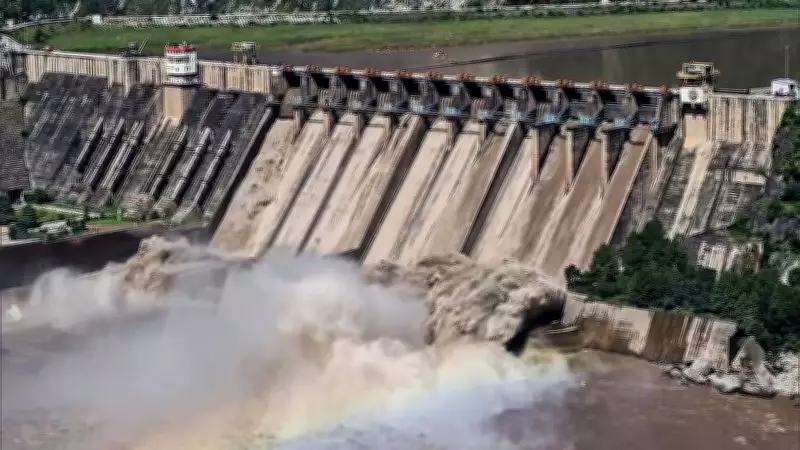
A year after the Indus Water Treaty was placed in abeyance, Jammu and Kashmir is witnessing a significant acceleration in hydropower development. The region is pushing forward with several hydroelectric projects to harness its vast water resources and meet growing energy demands.
Renewed Focus on Hydropower
The abeyance of the treaty, which had governed water sharing between India and Pakistan for decades, has provided a strategic window for J&K to expedite its hydropower ambitions. Officials state that multiple projects that were previously stalled due to treaty constraints are now being fast-tracked.
Key Projects Underway
Among the prominent initiatives is the 1,000 MW Pakal Dul project, along with several smaller run-of-river schemes. These projects are expected to add significant capacity to the region's power grid, reducing dependence on external sources and providing electricity to remote areas.

The government has also prioritized the development of the 624 MW Kiru project and the 540 MW Kwar project, both on the Chenab River. Environmental clearances and land acquisition processes have been streamlined to ensure timely completion.
Economic and Social Impact
The hydropower push is anticipated to create thousands of jobs, both during construction and operation phases. Local communities are expected to benefit from improved infrastructure, including roads and communication networks, as well as revenue sharing from the projects.
Additionally, the increased power generation will support industrial growth in the region, attracting investments in manufacturing and other sectors. The government has assured that the projects will adhere to strict environmental norms to minimize ecological disruption.
Challenges and Way Forward
Despite the momentum, challenges remain, including geological hurdles, funding gaps, and the need for advanced technology. The administration is collaborating with central agencies and private players to overcome these obstacles.
Experts believe that the successful execution of these projects could transform J&K into a power surplus region, contributing to India's renewable energy targets and enhancing energy security.






