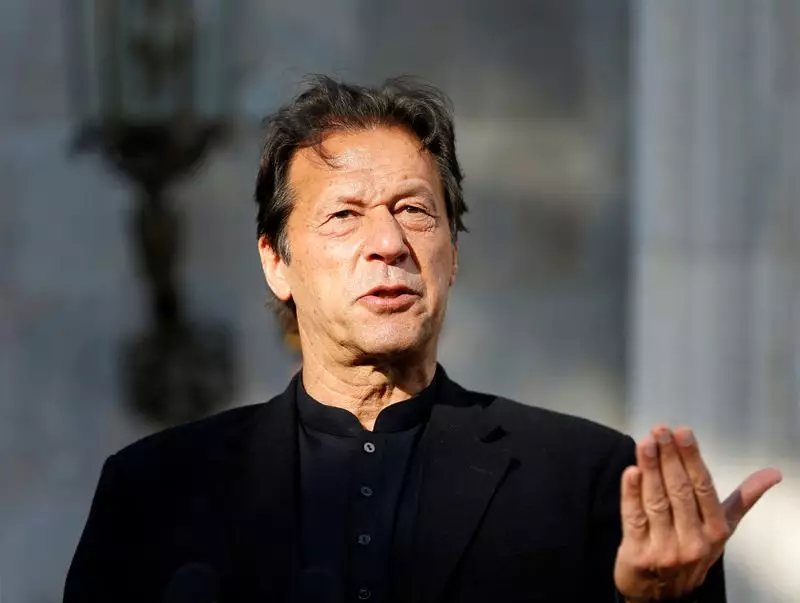
In a significant development from behind bars, former Pakistani Prime Minister Imran Khan has delivered a pointed message directed at the country's powerful Army Chief, General Asim Munir. This communication comes merely a day after Khan held a meeting with his sister, Aleema Khan, at Rawalpindi's Adiala Jail where he is currently incarcerated.
The Jailhouse Message and Its Timing
The content of Imran Khan's message, while not explicitly detailed in public reports, is understood to carry substantial political weight. It was conveyed on Thursday, a day after his sister's visit on Wednesday. Analysts view the timing as strategic, suggesting the meeting with his family member may have been a precursor to this formal communication with the military establishment's top leader.
Khan, the chairman of the Pakistan Tehreek-e-Insaf (PTI) party, has been imprisoned at Adiala Jail following his arrest in multiple cases. His relationship with the military leadership, particularly with Army Chief General Asim Munir, has been notably strained since his ouster from power in April 2022.

A History of Strained Civil-Military Relations
The backdrop of this jailhouse message is a prolonged and bitter confrontation between Khan's political faction and the establishment. Khan has repeatedly accused the military leadership, including General Munir, of orchestrating his removal from office and engineering a crackdown on his party to sideline him from politics.
This period has seen mass arrests of PTI workers, a state-led campaign against the party, and legal cases that have effectively dismantled its organizational structure. Khan's own convictions in cases like the Toshakhana and cipher controversies have barred him from contesting elections, with his party forced to participate as independents in the February 2024 polls.
Implications for Pakistan's Political Landscape
This direct message from a jailed former premier to the sitting army chief underscores the deep and unresolved tensions at the heart of Pakistan's governance. It highlights Khan's continued attempt to engage with, or pressure, the military establishment despite his imprisonment. The act itself is seen as a bold political maneuver, asserting his relevance and refusing to be silenced.
The development raises immediate questions about the potential for any backchannel dialogue or negotiation. It also signals that the political crisis, far from being settled, continues to simmer. The military, under General Munir, has maintained a public stance of non-interference in politics, but its shadow looms large over the current coalition government led by Prime Minister Shehbaz Sharif.
The key question now is whether this message will open any avenue for de-escalation or if it represents another chapter in the ongoing standoff. For Pakistan, a nation perpetually navigating the complex triangle of military influence, political power, and public sentiment, this episode adds another layer of uncertainty to an already volatile situation. The world watches to see if the words from Adiala Jail will alter the course of the country's troubled politics.