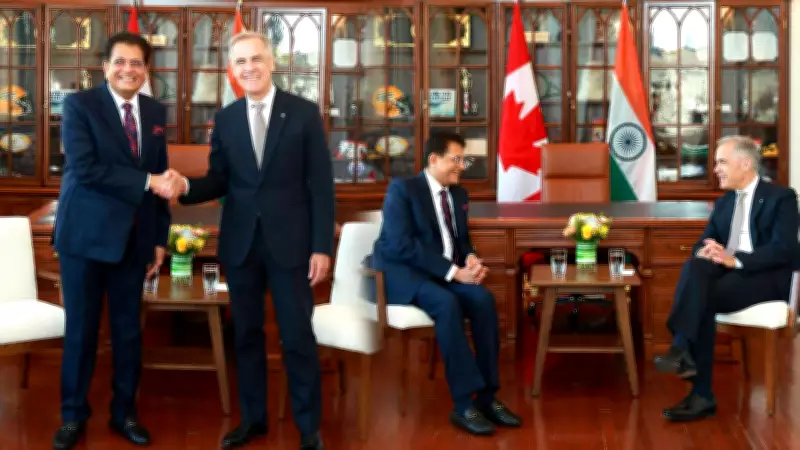
India and Canada are rapidly rebuilding ties after years of diplomatic tensions, with both countries now working toward a major free trade agreement under the Comprehensive Economic Partnership Agreement (CEPA) framework. Prime Minister Mark Carney described the proposed deal as a “game changer” as India’s Commerce Minister Piyush Goyal held high-level meetings in Ottawa.
Bilateral Trade Target
The two nations are aiming to raise bilateral trade from the current $17 billion to $50 billion by 2030 amid a broader geopolitical and economic reset. This ambitious target reflects a renewed commitment to strengthening economic cooperation and reducing barriers to trade and investment.
Key Highlights of the Trade Reset
- CEPA Framework: The proposed free trade agreement under CEPA is expected to cover goods, services, and investment, providing a comprehensive platform for economic engagement.
- High-Level Meetings: Commerce Minister Piyush Goyal’s visit to Ottawa included discussions with Canadian officials to fast-track the negotiations.
- Strategic Timing: The push comes as both countries seek to diversify trade partnerships and reduce dependence on other major economies.
Geopolitical Context
The trade reset is part of a broader geopolitical recalibration. India and Canada have faced diplomatic strains in recent years, but both sides are now prioritizing economic ties. The deal is seen as a way to bolster supply chain resilience and create new opportunities for businesses and workers in both nations.

Potential Impact
If successful, the agreement could significantly boost exports in sectors such as agriculture, technology, pharmaceuticals, and clean energy. Canadian Prime Minister Mark Carney emphasized the transformative potential of the deal, calling it a “game changer” for bilateral relations.
The next round of talks is expected to take place in New Delhi later this year, with both sides optimistic about reaching a final agreement by 2027.