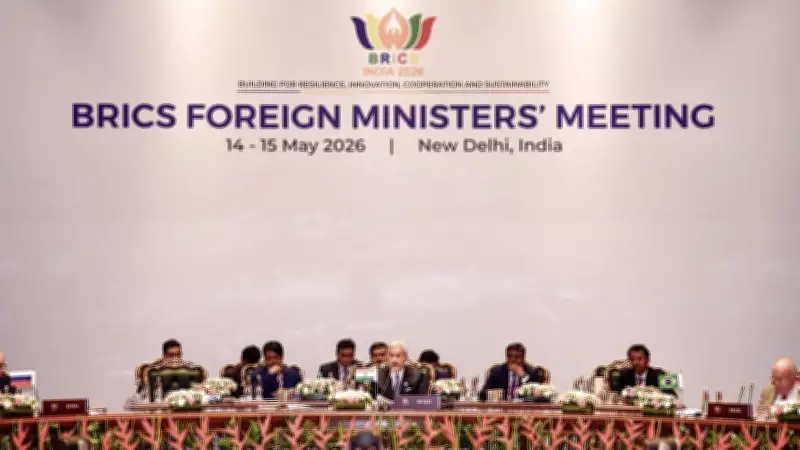
India issued a chair statement following a BRICS meeting, navigating deep differences among member states over the escalating Gulf crisis. The statement, released on 15 May 2026, came amid heightened tensions between Iran and the United Arab Emirates, which are on opposing sides in Tehran's ongoing conflict with the United States and Israel.
Background of the Gulf Crisis
The Gulf crisis has intensified as Iran and the UAE find themselves on opposite ends of a regional confrontation. Iran has been engaged in a war with the US and Israel, during which it has targeted the UAE more than any other Gulf country. This has created a complex dynamic within BRICS, where member nations hold divergent views on the conflict.
India's Role in BRICS
As the current chair of BRICS, India sought to balance the interests of its members, including Iran and the UAE, both of which have significant ties to New Delhi. The chair statement emphasized the need for dialogue and de-escalation, while refraining from directly criticizing any party. India has historically maintained close relations with both Iran and the UAE, making its diplomatic position particularly delicate.

Reactions and Implications
The statement was seen as a careful attempt to preserve unity within BRICS, which includes countries with varying stances on the Gulf crisis. Analysts noted that India's approach reflects its broader foreign policy of strategic autonomy, avoiding alignment with any single bloc. The meeting highlighted the challenges of multilateral diplomacy in a region fraught with rivalries.
Observers suggest that the BRICS chair statement may have limited immediate impact on the ground, but it underscores India's growing role as a mediator in global affairs. The crisis continues to evolve, with potential repercussions for energy markets and regional stability.