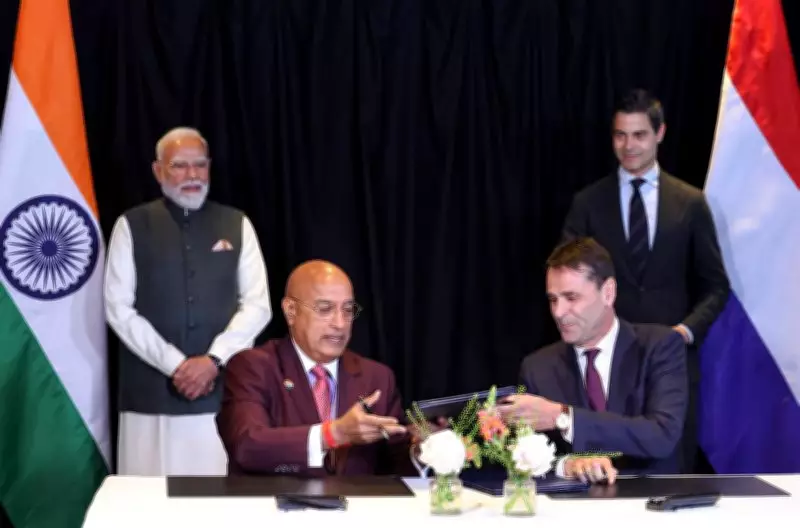
India and the Netherlands have taken a significant step forward in strengthening their bilateral relations, with a major focus on semiconductor manufacturing. A landmark agreement between Dutch chipmaking equipment giant ASML and the Tata Group is set to boost India's ambitions in the semiconductor sector.
Key Highlights of the ASML-Tata Agreement
The partnership between ASML and Tata Group aims to enhance collaboration in the semiconductor ecosystem. ASML, a global leader in photolithography systems, will supply advanced chipmaking equipment to Tata Electronics, a subsidiary of the Tata Group. This move is expected to accelerate India's efforts to establish a robust semiconductor manufacturing base.
Strategic Importance for India
This deal aligns with India's broader goal of becoming a hub for electronics manufacturing and reducing dependence on imports. The Indian government has been actively promoting semiconductor fabrication units through incentives and policy support. The collaboration with ASML is seen as a critical enabler for local chip production, which is vital for industries ranging from telecommunications to automotive.

Technology Transfer and Skill Development
Beyond equipment supply, the agreement includes provisions for technology transfer and skill development. ASML will provide training and technical support to Indian engineers, fostering a skilled workforce in advanced semiconductor manufacturing. This knowledge exchange is expected to create a multiplier effect, boosting innovation and research in the Indian semiconductor ecosystem.
Broader India-Netherlands Bilateral Ties
The chipmaking push is part of a wider strengthening of ties between India and the Netherlands. Both nations have been collaborating on various fronts, including water management, agriculture, and renewable energy. The semiconductor partnership underscores the deepening economic and technological cooperation.
Impact on Global Supply Chains
The agreement also has implications for global semiconductor supply chains. As companies seek to diversify their manufacturing bases, India emerges as a promising destination. The ASML-Tata deal could pave the way for more such partnerships, enhancing India's role in the global chipmaking landscape.
In summary, the ASML-Tata agreement represents a major milestone in India-Netherlands relations, giving a substantial push to India's chipmaking ambitions. It promises to bring advanced technology, create jobs, and strengthen India's position in the global semiconductor value chain.