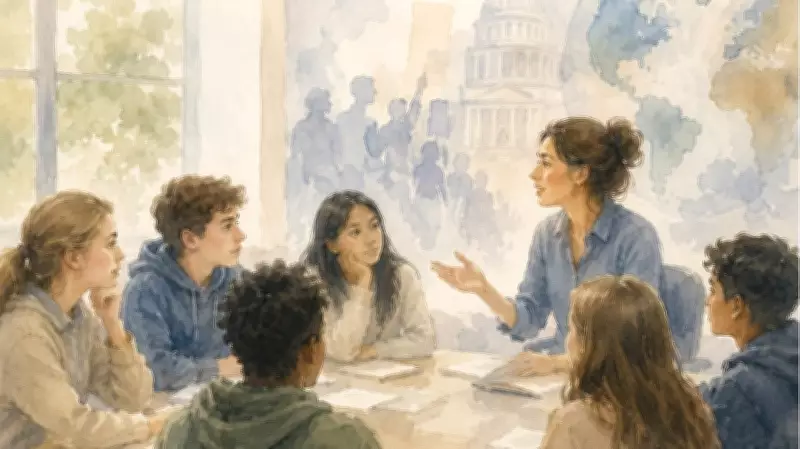
Political education is essential for students to develop critical thinking skills, with the goal of teaching them how to think rather than what to think. This approach empowers young minds to analyze complex issues and form independent opinions.
The Importance of Political Education
In a rapidly changing world, understanding politics is crucial for students to become informed citizens. According to educators, political literacy helps students engage with societal issues and participate meaningfully in democratic processes. The focus should be on fostering analytical abilities, not indoctrination.
Developing Critical Thinking Through Politics
Political education encourages students to question assumptions, evaluate evidence, and consider multiple perspectives. By studying political systems, ideologies, and current events, students learn to navigate diverse viewpoints. This skill is vital for academic success and lifelong learning.

Role of Teachers and Curriculum
Teachers play a key role in facilitating open discussions and creating a safe space for debate. The curriculum should include topics like governance, rights, and responsibilities, presented in an age-appropriate manner. Guest speakers and simulations can enhance understanding.
Impact on Leadership and Civic Engagement
Students exposed to political education are more likely to develop leadership qualities and engage in community service. They become better equipped to address challenges like inequality and climate change. As one educator noted, “The aim is not to tell students what to believe, but to equip them with the tools to decide for themselves.”
Challenges and Considerations
Implementing political education requires balanced content to avoid bias. Schools must ensure that teaching remains objective and inclusive. Parental involvement and teacher training are critical to success. Despite challenges, the benefits of a politically literate generation are immense.