

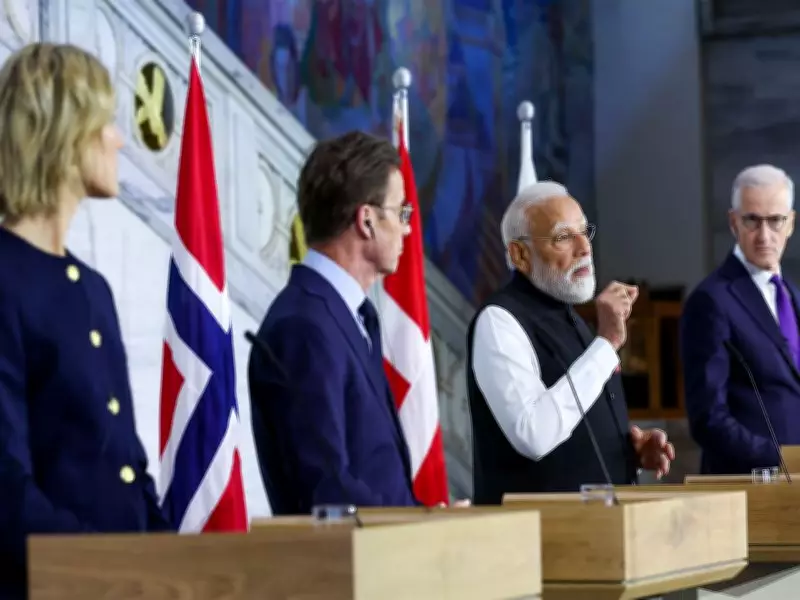
The recent India-Nordic summit marks a significant milestone in New Delhi's emergence as a co-author of global governance. The meeting, which brought together leaders from India and the five Nordic countries—Denmark, Finland, Iceland, Norway, and Sweden—underscored a shared commitment to multilateralism, sustainable development, and technological innovation.
Strengthening Bilateral Ties
The summit served as a platform to deepen cooperation across various sectors, including trade, investment, climate change, and digitalization. Both sides emphasized the importance of rules-based international order and the need for collaborative solutions to global challenges. The discussions also highlighted the potential for joint initiatives in areas such as renewable energy, Arctic research, and healthcare.
Key Outcomes
- Green Transition: India and Nordic nations agreed to enhance collaboration on green technologies, including hydrogen energy, wind power, and electric mobility. This aligns with India's ambitious renewable energy targets and the Nordic countries' leadership in sustainability.
- Digital Partnership: The leaders launched a joint task force on digitalization to promote innovation in areas like artificial intelligence, cybersecurity, and smart cities. This partnership aims to leverage Nordic expertise in digital governance and India's technological prowess.
- Trade and Investment: Both sides committed to expanding bilateral trade, which currently stands at around $5 billion. They explored opportunities in sectors such as pharmaceuticals, maritime industries, and food processing.
Global Governance Co-Authorship
The summit reflects India's growing assertiveness in shaping global norms and institutions. By engaging with the Nordic countries—known for their progressive policies and diplomatic influence—India is positioning itself as a key player in forums like the United Nations, World Trade Organization, and climate negotiations. The joint statement issued after the summit called for reforms in multilateral institutions to make them more inclusive and representative of contemporary realities.

Strategic Significance
Analysts view the summit as part of India's broader strategy to build partnerships with like-minded countries. The Nordic region, with its strong emphasis on human rights, gender equality, and environmental sustainability, aligns well with India's developmental priorities. Moreover, the summit provided an opportunity for India to counterbalance China's influence in the region, particularly in the Arctic and the Indo-Pacific.
Future Prospects
The leaders agreed to hold the next summit in India in 2025, signaling a sustained commitment to this partnership. They also outlined a roadmap for cooperation in emerging technologies, health security, and education. The summit's success demonstrates that middle powers can play a pivotal role in co-authoring global governance frameworks that address the complexities of the 21st century.
In conclusion, the India-Nordic summit is not just a diplomatic event but a testament to New Delhi's evolving role as a co-author of global governance. By fostering deeper ties with the Nordic countries, India is contributing to a more multipolar and cooperative world order.






