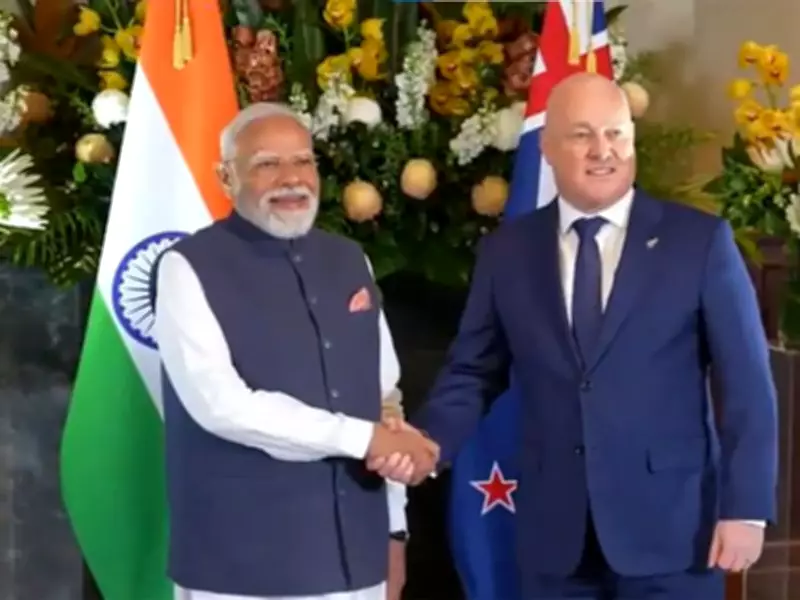
India and New Zealand elevated their bilateral relationship to a Strategic Partnership on Saturday, adopting the India-New Zealand Strategic Partnership: Roadmap to 2030, which sets an ambitious framework to deepen cooperation across trade, agriculture, security, innovation, and people-to-people ties over the next four years. The announcement came during Prime Minister Narendra Modi's official visit to New Zealand on July 10-11, the first by an Indian Prime Minister in 40 years, at the invitation of Prime Minister Christopher Luxon.
Strategic Partnership and Roadmap to 2030
According to the India-New Zealand Joint Statement, the two Prime Ministers decided to elevate the bilateral relationship to a Strategic Partnership and endorsed the roadmap as a framework to guide joint action over the next four years. The statement added that the leaders agreed to an ambitious long-term vision for the partnership, aiming to take bilateral relations to a new level, strengthen existing cooperation mechanisms, and explore new avenues for deepening cooperation both bilaterally and multilaterally.
Trade Target and Free Trade Agreement
Under Pillar III of the roadmap on Trade and Economic Cooperation, both countries agreed to work towards an aspirational goal of doubling bilateral two-way trade in goods and services to NZD 7 billion (approximately ₹35,000 crore) by 2030. The roadmap also states that both sides will work together on next steps for the India-New Zealand Free Trade Agreement (FTA) to ensure its early entry into force and effective implementation. The Joint Statement welcomed the conclusion and signature of a balanced, comprehensive, and mutually beneficial FTA, recognizing its important role in strengthening the economic partnership through removal of trade barriers, increased cooperation, and New Zealand's promotion of investment into India.

Support for Viksit Bharat and Customs Cooperation
The Joint Statement noted that New Zealand can support India's Viksit Bharat goal to become a developed country by 2047, including through cooperation in trade, agriculture, skills, innovation, clean energy, sport, and other areas. On customs cooperation, the roadmap provides for operationalising the 2025 Authorised Economic Operators Mutual Recognition Arrangement under the aegis of the 2024 Customs Cooperation Arrangement to simplify customs processes and facilitate trusted trade.
Tourism, Aviation, and Primary Industries
The two leaders welcomed the signing of a Memorandum of Arrangement on Tourism and encouraged airlines to commence direct non-stop flights between India and New Zealand. The Joint Statement highlighted expanding cooperation in primary industries, including horticulture, forestry, animal husbandry, and dairying. It welcomed the Agricultural Productivity Partnership under the FTA, including New Zealand's work with India on productivity action plans for kiwifruit, apples, and honey, support for Centres of Excellence in kiwifruit in India, and the conclusion of a Memorandum of Cooperation on Animal Husbandry and Dairying.
Maritime Cooperation and Seafarer Mobility
The leaders also welcomed continued dialogue between India's Directorate General of Shipping and Maritime New Zealand to strengthen recognition of seafarer competency certificates, noting that enhanced recognition would support seafarer mobility and strengthen cooperation between the two countries' maritime authorities.