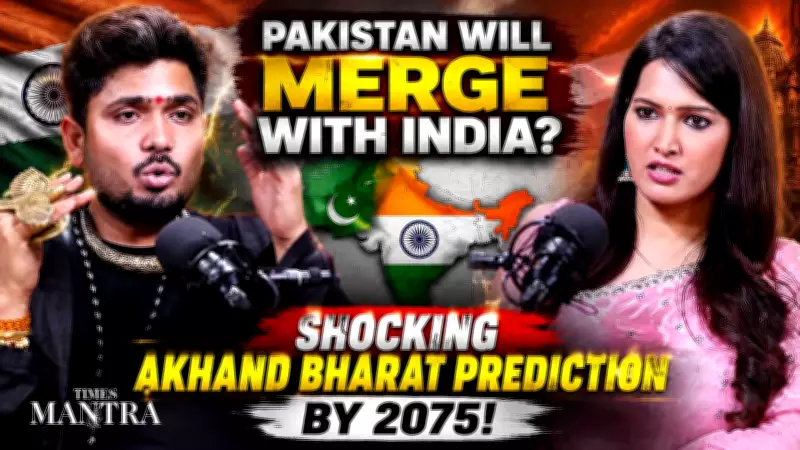
Could Pakistan and India reunite again in the future? In a recent discussion, Sumit Acharya shared a shocking Akhand Bharat prediction linked to the year 2075, blending geopolitics, astrology, and future regional changes. The conversation has sparked widespread curiosity online, with many people discussing the possibility of India and Pakistan reconnecting.
The Akhand Bharat Theory
The concept of Akhand Bharat, or undivided India, has historical and cultural roots that predate the partition of 1947. Sumit Acharya's prediction suggests that by 2075, geopolitical shifts, spiritual awakenings, and astrological alignments could pave the way for reunification. This theory is not new, but it has gained traction in recent years due to changing global dynamics.
Geopolitical Factors
According to Acharya, the current geopolitical landscape in South Asia is fluid. Rising economic interdependence, cultural exchanges, and the need for regional stability could drive the two nations closer. He argues that historical divisions may eventually give way to a shared future, as both countries face common challenges such as climate change, water scarcity, and terrorism.

Astrological Insights
Astrology plays a significant role in Acharya's prediction. He points to planetary alignments in 2075 that he believes will create a favorable cosmic environment for unity. While skeptics dismiss astrology, many followers find these insights compelling. The alignment of Jupiter and Saturn, for instance, is often associated with major societal transformations.
Spiritual and Cultural Perspectives
Acharya emphasizes that the spiritual and cultural bonds between India and Pakistan have never truly broken. Shared languages, traditions, and religious sites continue to connect people across the border. He suggests that a spiritual renaissance could foster a sense of common identity, transcending political boundaries.
Why This Prediction Matters
The idea of India-Pakistan reunification is both controversial and inspiring. For some, it represents a return to a glorious past; for others, it seems impractical given decades of conflict. However, Acharya's prediction has ignited discussions on social media, with many expressing hope for a peaceful, united South Asia.
Online Reactions
Since the podcast aired, hashtags like #AkhandBharat and #IndiaPakistanReunion have trended. Supporters argue that unity would boost economic growth and regional stability, while critics point to deep-seated political and religious differences. Regardless, the conversation has brought renewed attention to the possibilities of the future.
Expert Opinions
Geopolitical analysts remain divided. Some dismiss the prediction as speculative, while others acknowledge that long-term trends could shift in unpredictable ways. Historians note that borders have changed throughout history, and what seems impossible today may become plausible tomorrow.
Conclusion
Sumit Acharya's prediction that India and Pakistan could reunite by 2075 is a thought-provoking blend of geopolitics, astrology, and spirituality. Whether one believes in it or not, the discussion highlights the enduring hope for peace and unity in South Asia. As the world evolves, so too might the boundaries that divide us.