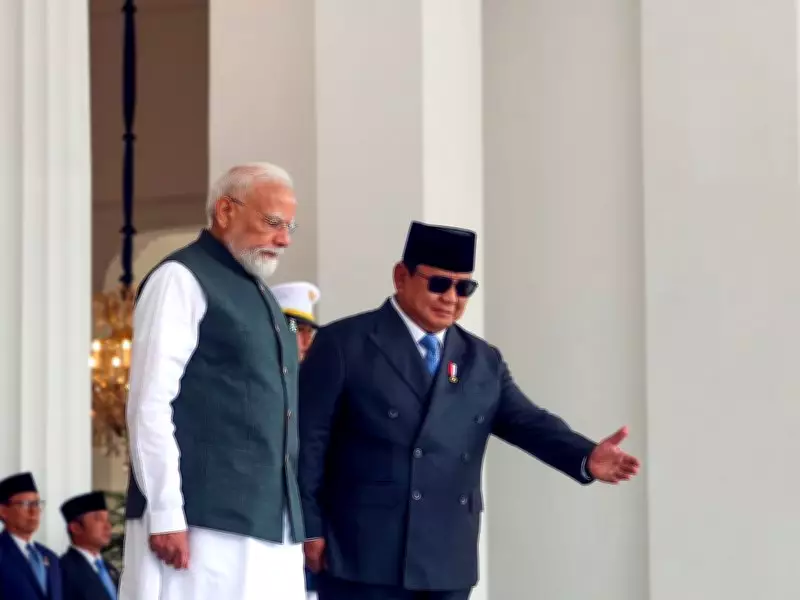
India will supply 100 tonnes of high-quality 'DWR 162' wheat seeds to Indonesia, Prime Minister Narendra Modi announced during his state visit to Jakarta on July 7, 2026. The move is aimed at strengthening food security in Indonesia, which relies entirely on wheat imports due to its tropical climate.
Announcement During Joint Press Conference
Speaking at a joint press conference with Indonesian President Prabowo Subianto, PM Modi said, "The Indian government will provide specially developed Indian wheat to Indonesia to bolster its food security." He added that both nations are committed to building resilient food security systems and have elevated their bilateral ties to a 'Golden Chapter' of comprehensive strategic cooperation.
Details of the Agricultural Cooperation
The wheat seeds, developed in India, are part of a broader engagement to develop sustainable agricultural systems. PM Modi stated, "We will share best practices in sustainable farming and agrotechnology. The 21st century is driven by technology, and our youth have a strong interest in it." The two sides also discussed solutions regarding mid-day meal schemes and public distribution systems.

MoU on Agriculture and Allied Sectors
India and Indonesia signed a Memorandum of Understanding (MoU) on cooperation in agriculture and allied sectors. Indian Ambassador to Indonesia, Sandeep Chakravorty, underscored the strategic importance of this cooperation. "Addressing regional food stability, the two allies are building resilient food security cooperation. India has actively extended support to Indonesia's primary food security priorities, notably through the critical supply of 100 tonnes of high-quality 'DWR 162' wheat seeds. This forms part of a broader, sustained engagement aimed at developing resilient and sustainable agricultural systems," Ambassador Chakravorty told ANI.
Broader Outcomes of the State Visit
PM Modi's state visit to Indonesia saw the announcement of 20 major outcomes, including 14 MoUs and six major announcements spanning strategic, economic, technological, and cultural cooperation. Key areas of agreement include defence, space, healthcare, agriculture, technology, and critical minerals, as both nations agreed to deepen their Comprehensive Strategic Partnership.
Significance for Indonesia
Indonesia does not grow wheat due to its tropical climate and is one of the world's largest wheat importers. The supply of high-quality seeds aims to help Indonesia develop its own wheat cultivation capacity, reducing reliance on imports and enhancing food security.