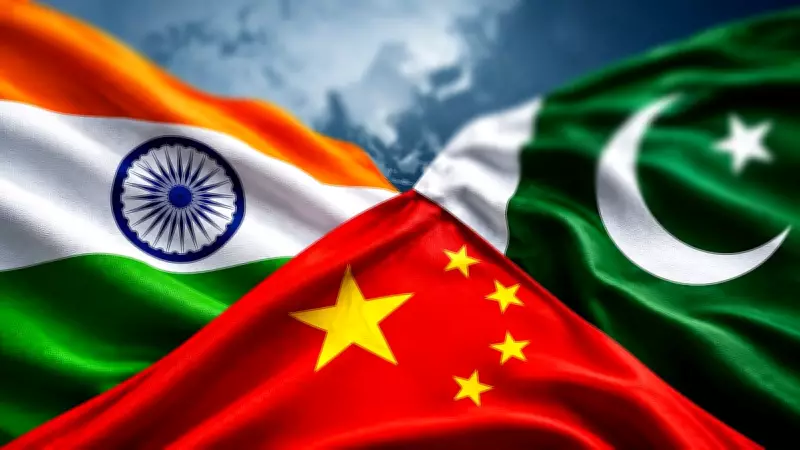
A recent report by the International Institute for Strategic Studies (IISS) has underscored that India's conventional-threat perception is primarily focused on Pakistan and China. The report, published on May 28, 2026, suggests that any potential future major conventional war involving India would likely remain localized in nature.
Key Findings of the IISS Report
The IISS report emphasizes that India's military planning and strategic posture are heavily influenced by the perceived threats from its two nuclear-armed neighbors. It notes that while India has conducted surgical strikes in the past, these operations have only been carried out against Pakistan, not China.
Nature of Potential Conflicts
According to the report, any major conventional conflict would be confined to specific regions rather than escalating into a full-scale war. This assessment is based on the current geopolitical dynamics and the military capabilities of the involved nations.

Implications for Regional Security
The findings have significant implications for South Asian security. The report calls for careful management of tensions to prevent any localized conflict from spiraling into a broader confrontation. It also highlights the importance of diplomatic channels in de-escalating potential crises.
India's strategic community has long viewed Pakistan and China as primary threats, with the former being a perennial source of cross-border terrorism and the latter posing challenges along the Line of Actual Control (LAC). The IISS report reinforces these perceptions while providing a nuanced analysis of the potential scenarios for conventional warfare.