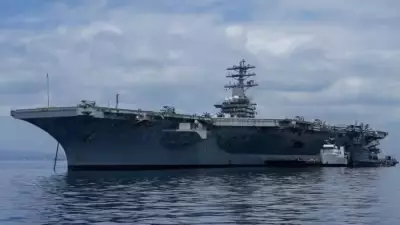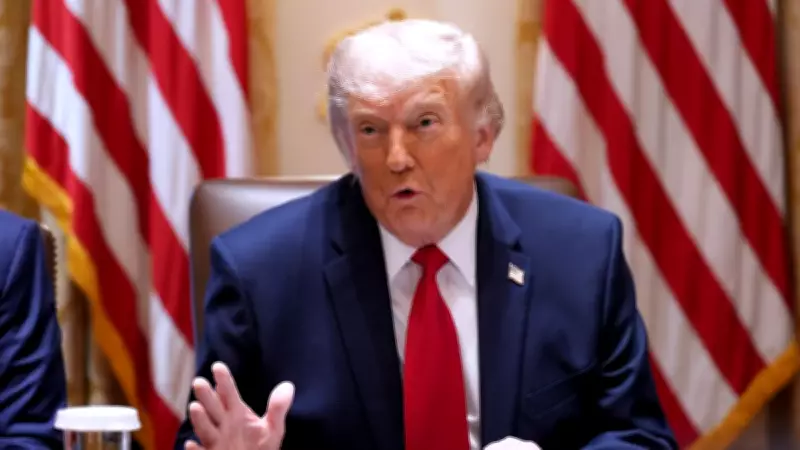
Former US President Donald Trump has issued a stark warning to Oman, cautioning the Gulf nation against aligning with Iran in the ongoing tensions over the Strait of Hormuz. In a statement that has sent ripples through diplomatic circles, Trump declared that Oman must "behave or will blow you up," escalating rhetoric surrounding the critical maritime chokepoint.
Background of the Strait of Hormuz Dispute
The Strait of Hormuz, a narrow waterway between the Persian Gulf and the Gulf of Oman, is a vital passage for global oil shipments. Approximately 20% of the world's petroleum passes through this strait, making it a strategic focal point for regional and global powers. Iran has historically threatened to block the strait in response to sanctions or military pressure, while the United States and its allies have vowed to keep it open.
Trump's Remarks and Implications
Trump's warning came during a campaign rally, where he criticized Oman for what he perceived as a tilt toward Iran. He stated, "Oman is playing a dangerous game. They think they can side with Iran and we won't notice. Well, we notice, and they better behave, or we will blow them up." The remarks have drawn sharp reactions from international observers, who fear that such language could further destabilize an already volatile region.

Oman has historically maintained a neutral stance in regional conflicts, often acting as a mediator between Iran and Western nations. However, recent reports suggest that Oman has allowed Iranian vessels to use its ports and territorial waters for resupply, which the US views as a violation of sanctions and a threat to maritime security.
Regional and Global Reactions
The warning has been met with concern from several Gulf states, which rely on the Strait of Hormuz for their oil exports. Saudi Arabia and the United Arab Emirates have urged restraint, while Iran dismissed Trump's comments as "saber-rattling." A spokesperson for the Iranian Foreign Ministry said, "The Islamic Republic of Iran will not be intimidated by such threats. We will continue to defend our rights and interests in the Persian Gulf."
Analysts note that Trump's aggressive posture could backfire, potentially pushing Oman closer to Iran. "Threatening a neutral country like Oman is counterproductive," said Dr. Sarah Johnson, a Middle East expert at the Center for Strategic Studies. "It undermines US credibility and could strengthen Iran's position in the region."
Strategic Importance of Oman
Oman's location at the entrance to the Strait of Hormuz gives it significant strategic leverage. The country hosts a US naval base at Duqm, which has been used for joint exercises and logistical support. However, Oman has also maintained close ties with Iran, sharing intelligence and cooperating on security issues. This balancing act has allowed Oman to play a unique role as a mediator, but it has also drawn criticism from Washington.
In recent months, the US has increased pressure on Oman to crack down on Iranian activities, including alleged smuggling of weapons and oil. Trump's latest remarks indicate a hardening of the US stance, with potential consequences for Omani-American relations.
Potential Consequences of the Warning
If Oman continues to resist US demands, it could face economic sanctions or military action. Trump hinted at such measures, saying, "We have many options, and all of them are on the table." However, experts warn that any escalation could disrupt global oil supplies and lead to a broader conflict in the Middle East.
The Strait of Hormuz remains a flashpoint, with Iran and the US frequently exchanging threats. Trump's warning to Oman adds a new dimension to the crisis, highlighting the delicate alliances and rivalries that shape the region's geopolitics.
Conclusion
As the situation develops, all eyes are on Oman's response. The Gulf nation faces a difficult choice: maintain its neutrality and risk US retaliation, or align with Washington and jeopardize its ties with Tehran. Either way, the outcome will have far-reaching implications for regional stability and global energy security.