

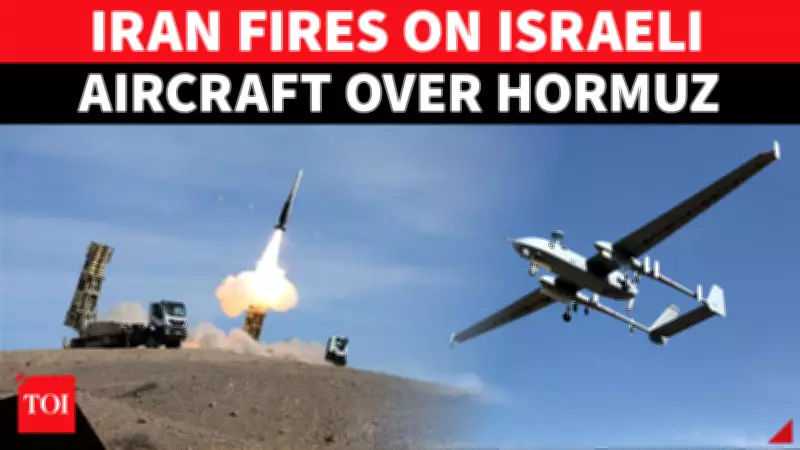
Iran has announced that its military forces successfully intercepted and shot down an Israeli-made surveillance drone in the southern province of Hormozgan, near the strategically vital Strait of Hormuz. The announcement was made through Iran's Mehr news agency on Monday, marking a significant escalation in the ongoing tensions between the two nations.
According to Iranian officials, the drone was identified as an Orbiter, a type of unmanned aerial vehicle commonly used for reconnaissance missions. The wreckage of the drone was reportedly recovered with the assistance of naval forces operating in the region. The interception occurred at a time of heightened sensitivity, as expectations grow regarding a potential memorandum of understanding between the United States and Iran, linked to ongoing nuclear negotiations.
While Tehran has presented the drone interception as a major defensive operation and a demonstration of its military capabilities, the Israel Defense Forces (IDF) responded by stating that they were "not familiar" with the reported incident. This denial from the IDF has cast some doubt on the details of the event, though Iranian authorities remain firm in their account.

The Strait of Hormuz is a critical chokepoint for global oil shipments, and any military activity in the area has significant implications for international energy markets and regional security. The incident underscores the fragile state of affairs in the Middle East, where espionage and counter-espionage operations are common.
Background and Context
This incident is not the first time Iran has claimed to have intercepted Israeli drones. In recent years, Iran has repeatedly asserted its ability to detect and neutralize foreign surveillance aircraft entering its airspace. The Orbiter drone is a lightweight, portable system designed for tactical reconnaissance, and its presence near Hormuz suggests a possible attempt to gather intelligence on Iranian military installations or maritime activities.
The timing of the incident is particularly noteworthy. Reports indicate that the United States and Iran may be close to signing a memorandum of understanding related to nuclear negotiations, which could lead to a thaw in relations. However, such developments are often met with resistance from hardliners on both sides, and this drone incident could be seen as an attempt to disrupt the diplomatic process.
Reactions and Implications
The Iranian government has used this event to showcase its military readiness and its ability to defend its territorial integrity. State media have highlighted the successful operation as a victory for Iran's defense forces. On the other hand, the IDF's denial raises questions about whether the drone was indeed Israeli or if it was operated by another entity. Some analysts suggest that the drone could have been operated by a third party, possibly with links to Israel, or that the incident may have been misidentified.
International observers are closely monitoring the situation, as any miscalculation in the region could lead to a broader conflict. The Strait of Hormuz is a lifeline for global oil supplies, and any disruption could have severe economic consequences. The United States has not yet commented on the incident, but it is likely to be discussed in diplomatic channels.
In conclusion, the shooting down of an alleged Israeli spy drone near the Strait of Hormuz represents a significant development in the ongoing tensions between Iran and Israel. While the details remain contested, the incident highlights the fragile security environment in the region and the potential for further escalation.






